
 Search
System Configuration and Circuit Design Requirements
Hydraulic double vane pumps consist of two pumping cartridges within a single housing, driven by a common shaft, with independent inlet and outlet ports for each section. This configuration allows the pump to supply two separate hydraulic circuits from one prime mover, or to combine the outputs for high-flow operations. Proper application requires careful consideration of circuit design to realize the benefits of this configuration.
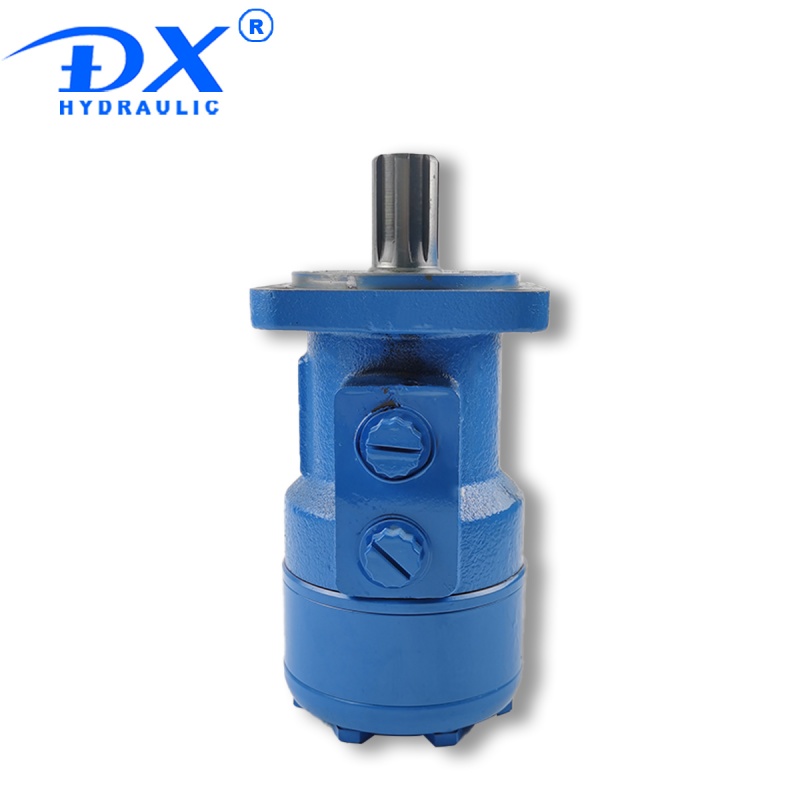
The two pump sections can be arranged in series or parallel configurations depending on system requirements. In series arrangements, fluid flows through one pump section and then the other, effectively doubling pressure capability while maintaining flow output. This configuration is used in systems requiring high pressure for clamping operations followed by lower pressure for feed functions. In parallel arrangements, both sections draw from a common reservoir and discharge into a common manifold, providing combined flow for rapid traverse operations while allowing one section to be unloaded during idle periods. The selection between series and parallel configurations affects reservoir sizing, heat generation, and control valve selection.
Load-sensing and pressure-compensating controls are often incorporated into double vane pump systems to improve efficiency. By unloading one pump section when its flow is not required, these controls reduce energy consumption and heat generation compared to fixed-displacement systems operating continuously at full flow. For example, in machine tool applications, both pump sections may supply flow for rapid traverse, while only the smaller section supplies flow for feed operations. This approach requires careful specification of compensator settings to ensure proper sequencing and to prevent pressure spikes during transitions.
Fluid Management and Contamination Control
Hydraulic double vane pumps, like all vane-type pumps, maintain critical clearances between vanes, rotor, and cam ring on the order of 5 to 20 micrometers. These tight clearances make the pump sensitive to fluid contamination, viscosity variations, and thermal conditions. Proper fluid management is essential for achieving the expected service life of 8,000 to 15,000 operating hours.
Fluid viscosity selection must consider both pump sections operating simultaneously. The viscosity at operating temperature should fall within the range of 15 to 400 centistokes, with the range between 25 and 80 centistokes. Low viscosity reduces the thickness of the fluid film between moving parts, accelerating wear on vanes, rotor slots, and the cam ring. High viscosity impedes vane extension at startup, potentially causing vane chatter and cavitation. For applications with wide ambient temperature variations, multigrade hydraulic fluids or systems with fluid heating and cooling may be necessary to maintain viscosity within acceptable limits.
Filtration requirements for double vane pumps are specified based on the tightest clearances within the pump. Absolute filtration of 10 to 25 micrometers is standard, with fluid cleanliness targets of ISO 4406 18/15 or better. Inlet filtration should be limited to coarse strainers (100 to 150 mesh) to avoid restricting flow; fine filtration should be placed on the pressure side of the pump. Each pump section may have independent filtration requirements if the circuits serve different functions—for example, a high-precision circuit may require finer filtration than a rough traverse circuit. When a common filter is used, the filter sizing must accommodate the combined flow of both sections.
Installation, Alignment, and Coupling Selection
The installation of a hydraulic double vane pump involves considerations beyond those of single pumps due to the increased mass and the potential for misalignment to affect both pump sections simultaneously. Double vane pumps typically weigh between 20 and 100 kilograms depending on frame size and displacement, requiring adequate mounting structures that do not deflect under operating loads.
Shaft alignment between the prime mover and the pump is critical. The pump shaft is designed to transmit the combined torque of both pumping sections, which can exceed 500 newton-meters in larger models. Angular misalignment should not exceed 0.25 degrees, and parallel misalignment should be within 0.10 millimeters total indicator reading (TIR). Flexible couplings with rubber, polyurethane, or steel spring elements accommodate minor misalignment while isolating the pump from the prime mover's vibration. Gear-type couplings, while capable of transmitting high torque, may transmit radial loads if misaligned and are generally not recommended for vane pump installations unless precisely aligned.
Mounting orientation affects both performance and service life. Double vane pumps are typically designed for horizontal mounting with the shaft horizontal and the pump housing foot-mounted or flange-mounted. Vertical mounting with the shaft pointing upward is possible with certain models but requires modifications to the inlet configuration and may require additional bearing lubrication provisions. In vertical installations, the upper pump section may experience reduced inlet flow due to the elevation difference between the reservoir and the pump, and special attention to priming is required.
Start-Up, Commissioning, and Operational Monitoring
The initial start-up of a hydraulic double vane pump requires systematic procedures to prevent damage from dry operation, trapped air, or incorrect pressure settings. These procedures are particularly important for double vane pumps because failure to establish fluid film in one section can lead to rapid wear before the condition is detected.
Prior to the first operation, the pump housing must be filled with hydraulic fluid through the case drain or outlet ports. For pumps mounted above the reservoir, the housing may not self-prime; in such installations, a priming pump or vacuum system is required to draw fluid into the pump before starting. Rotating the shaft manually several revolutions verifies that no internal binding exists and that both pump sections are free to rotate.
