
 Search
Hydraulic systems depend on precise fluid behavior to maintain stable pressure, consistent flow, and reliable mechanical movement. Among various pump technologies, the oil hydraulic vane pump is widely used because of its smooth operation, compact structure, and ability to handle continuous industrial workloads. However, unexpected performance reduction may occur once hydraulic oil viscosity falls below the suitable operating range.
Low viscosity conditions are often associated with elevated oil temperature, incorrect fluid selection, or long-term changes in hydraulic oil properties. The issue is not simply related to oil thickness. It directly affects internal sealing, lubrication film strength, vane movement, and volumetric performance. Hydraulic vane pump manufacturers commonly identify excessively low viscosity as a factor that can reduce lubrication quality and increase internal wear risks.
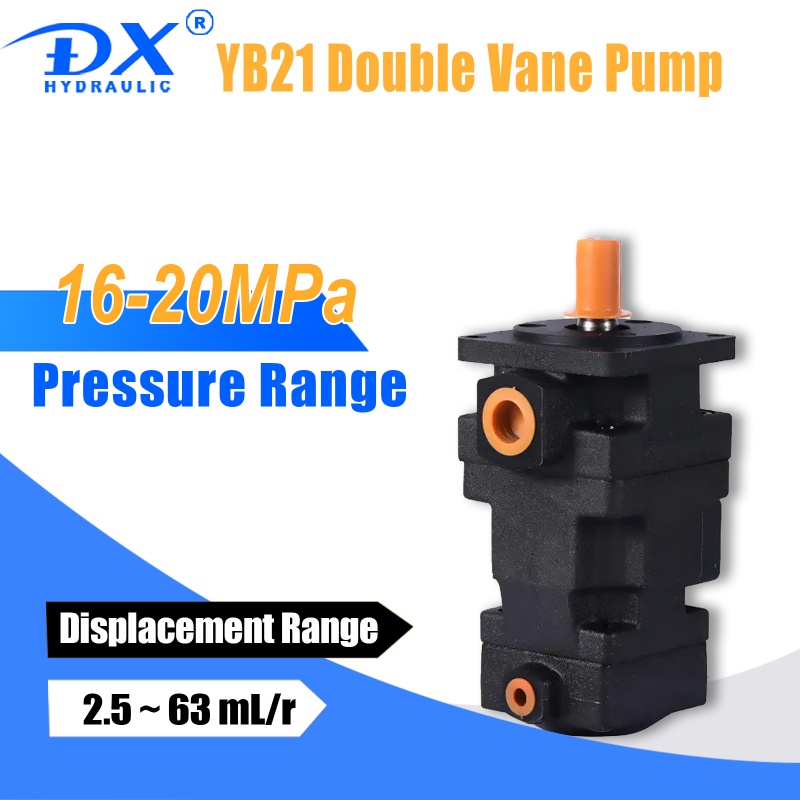
How viscosity influences vane pump operation
A vane pump relies on close mechanical clearances between rotating components. The rotor, vanes, cam ring, and side plates work together to create sealed chambers that transport hydraulic oil from the inlet side to the outlet side.
The oil film between moving surfaces performs several important functions:
- Reducing direct metal-to-metal contact
- Supporting sealing between internal components
- Controlling leakage through precision gaps
- Removing heat generated during operation
Once viscosity decreases too much, the protective oil layer becomes thinner. This changes the operating condition of the pump and reduces its ability to maintain stable internal pressure.
Why low viscosity reduces volumetric performance
One major reason behind performance decline is increased internal leakage. A vane pump depends on controlled clearances to maintain displacement efficiency. Hydraulic oil with insufficient viscosity flows more easily through these small gaps.
The result is a difference between theoretical displacement and actual output flow.
- Higher internal slip reduces effective flow delivery
- Reduced chamber sealing weakens pressure generation capability
- Greater leakage variation creates unstable output under changing loads
This problem becomes more noticeable at higher operating pressure because the pressure difference across internal clearances increases, forcing more oil through leakage paths.
The relationship between temperature and viscosity loss
Low viscosity conditions are frequently connected with temperature changes. Hydraulic oil becomes thinner as temperature rises, and the actual viscosity inside the pump may differ from the value measured in the reservoir.
A pump operating under continuous high load can generate localized heat around the rotor, vane tips, and pressure chambers. This means the oil film condition inside the pump may become more severe than expected from tank temperature readings. Technical documentation from vane pump specialists notes that very low viscosity can reduce lubrication film thickness and create local heat concentration areas.
Typical causes of viscosity reduction include:
- High ambient temperature operation
- Insufficient cooling capacity
- Using hydraulic oil outside recommended specifications
- Thermal degradation after extended operation
How low viscosity affects vane movement
The vane is a sensitive component inside a vane pump. During rotation, each vane must move smoothly inside the rotor slot while maintaining contact with the cam ring surface.
A stable oil film supports this movement. Low viscosity can change friction characteristics and reduce damping between moving parts.
- Vane contact pressure may become less stable
- Sliding surfaces may experience accelerated wear
- Rotor slot movement may become less consistent
- Pressure fluctuations may appear during rotation
The issue is especially important for high-speed applications because the vane movement frequency increases with rotational speed.
Can low viscosity create noise and vibration problems?
Performance loss does not always appear as a sudden pressure failure. Many systems show early warning signs through sound, vibration, or unstable actuator movement.
A reduction in oil film strength may influence the interaction between vanes and the cam ring. Small variations in contact conditions can create pressure ripple and mechanical vibration.
Common operating symptoms include:
- Increased pump operating noise
- Pressure gauge fluctuation
- Reduced actuator response consistency
- Higher oil temperature during operation
These symptoms may appear gradually because internal surfaces often experience progressive changes rather than immediate failure.
Why high-pressure applications are more sensitive
Pressure level has a direct influence on how strongly low viscosity affects pump performance. Higher pressure creates greater force across internal sealing areas, increasing the impact of leakage.
A system operating at moderate pressure may continue functioning with reduced viscosity, while a high-pressure hydraulic circuit may experience noticeable output loss under the same oil condition.
Applications that require careful viscosity control often include:
- Hydraulic presses
- Injection molding machines
- Industrial automation equipment
- Mobile hydraulic systems
Design considerations for stable pump performance
Modern vane pump designs include features that help maintain stable operation across different working conditions. However, every pump still operates within a specific viscosity range defined by its internal structure and material characteristics.
Important design elements include:
- Balanced pressure loading to reduce uneven force on rotating components
- Precision clearance control to limit unnecessary leakage
- Optimized vane geometry to support smooth movement
- Suitable material selection for wear resistance under hydraulic pressure
Understanding the real cause of performance decline
A drop in output performance from an oil hydraulic vane pump under low viscosity conditions is not caused by one single factor. It is the result of multiple interactions between fluid properties and mechanical precision.
Reduced lubrication film thickness, increased internal leakage, unstable vane movement, and higher friction levels can gradually change pump behavior. Recognizing the connection between viscosity and hydraulic performance helps engineers evaluate operating conditions more accurately.
Final perspective on low viscosity challenges
Low viscosity conditions reveal how closely hydraulic performance depends on fluid characteristics. A vane pump does not only move oil; it relies on oil to create sealing, lubrication, and controlled internal motion.
Maintaining suitable viscosity allows the pump components to work together as designed, while excessive viscosity reduction can disturb the balance between efficiency, durability, and pressure stability. Understanding this relationship provides a clearer view of why fluid conditions remain a key factor in hydraulic system reliability.
