
 Search

Choosing a hydraulic pump for industrial machinery requires more than matching a model number to an existing system. Flow demand, operating pressure, motor speed, and working cycles all influence pump sizing. An unsuitable configuration may cause slow actuator movement, excessive energy consumption, unstable pressure, or unnecessary heat generation.
At DENGXU, we work with hydraulic equipment manufacturers, distributors, and OEM customers who need reliable pump configurations for different applications. A hydraulic variable vane pump offers adjustable displacement, allowing its output flow to respond to changing system requirements. Understanding the relationship between flow and pressure is essential before confirming a pump specification.
This guide explains several technical factors that buyers and hydraulic system designers should review during the sizing process.
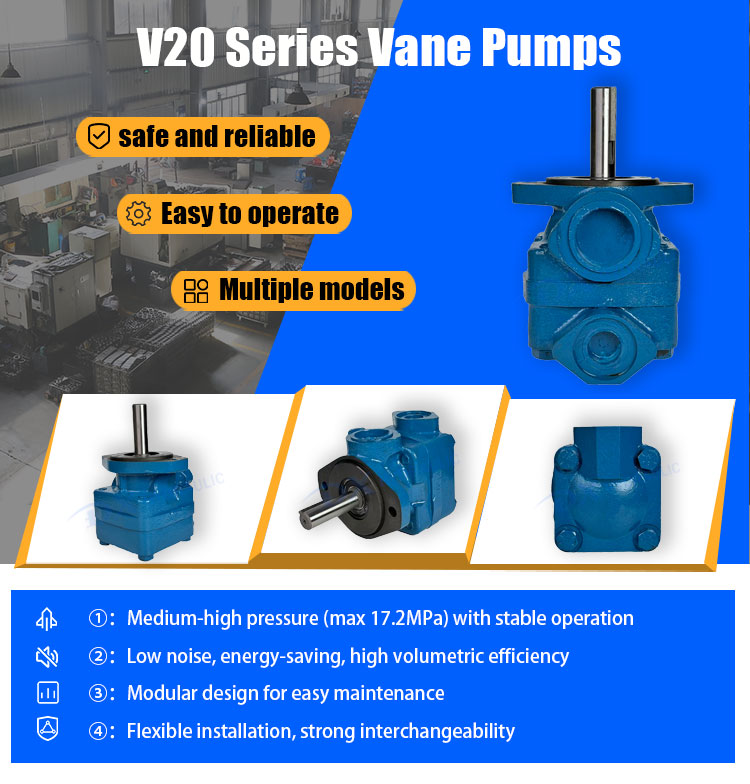
1. Calculate the Required Hydraulic Flow
Flow rate determines how quickly a hydraulic actuator can move. A pump with insufficient output may reduce machine operating speed, while excessive flow can increase power consumption and system temperature.
Buyers should begin by identifying the flow requirements of the connected cylinders, motors, and other hydraulic components.
A basic pump flow calculation is:
Q = V × n × ηv / 1000
- Q: Actual pump flow in L/min.
- V: Pump displacement in cm³/rev.
- n: Pump rotational speed in rpm.
- ηv: Volumetric efficiency.
For example, a pump with a displacement of 40 cm³/rev operating at 1,500 rpm and a volumetric efficiency of 90% produces approximately 54 L/min.
This calculation provides an initial sizing reference. Actual flow should also account for operating conditions, internal leakage, and simultaneous actuator movements.
2. Match Operating Pressure to the Equipment Load
Flow determines actuator speed, while pressure determines the available hydraulic force or torque. Both parameters must be considered together during pump sizing.
For a hydraulic cylinder, the required pressure can be estimated using:
P = F / A
- P: Required pressure.
- F: Required cylinder force.
- A: Effective piston area.
Actual system pressure should also include losses across pipes, fittings, control valves, and other hydraulic components.
During our technical discussions with customers, we recommend distinguishing between normal working pressure and peak pressure. The pump's rated pressure must accommodate the intended operating conditions, while suitable protection measures should address temporary pressure spikes.
3. Understand How Variable Displacement Works
Unlike a fixed-displacement pump, a variable vane pump can adjust its displacement by changing the position of the movable cam ring relative to the rotor. This changes the volume of oil delivered during each revolution.
Several operating characteristics are worth understanding:
- High-flow operation: The pump operates with greater displacement to supply hydraulic oil during demanding actuator movements.
- Reduced-flow operation: Displacement decreases as system demand becomes lower.
- Pressure compensation: A pressure compensator adjusts pump displacement according to the configured pressure setting.
- Standby operation: Under suitable pressure-compensated circuit conditions, the pump reduces output flow when the actuators are not demanding oil.
This operating principle can reduce unnecessary power consumption compared with continuously delivering full flow through a throttling arrangement. Actual energy savings depend on the complete hydraulic circuit and operating cycle.
4. Check the Drive Motor and Power Requirements
A hydraulic pump must operate within the available power capacity of its electric motor, diesel engine, or other prime mover. Insufficient driving power may prevent the system from maintaining its required flow and pressure.
The theoretical hydraulic power can be estimated using:
Hydraulic Power (kW) = Pressure (bar) × Flow (L/min) / 600
For example, a system operating at 100 bar with a flow rate of 50 L/min requires approximately 8.33 kW of hydraulic power. Actual input power will be higher because pump and drive efficiencies are not 100%.
We recommend checking the following details before confirming a pump configuration:
- Available motor power and operating speed.
- Maximum pressure and flow required at the same time.
- Drive shaft and coupling compatibility.
- Starting conditions and expected duty cycle.
5. Consider Oil Viscosity and Operating Temperature
Hydraulic fluid conditions influence internal leakage, lubrication, and pump response. Oil that is too viscous can increase inlet resistance, while excessively low viscosity may affect internal sealing and wear characteristics.
Buyers should confirm the recommended oil grade, operating viscosity range, temperature conditions, and filtration requirements for the specific pump model.
Clean hydraulic oil is particularly important for variable displacement mechanisms. Contamination may affect the movement of internal components and the operation of pressure compensation controls.
6. Evaluate the Pressure Compensation Setting
The pressure compensator controls the pump's displacement according to system pressure. Its setting should correspond to the actual working requirements rather than an arbitrary ideal value.
An excessively high setting may increase mechanical loading and energy demand. A setting that is too low may prevent the equipment from generating the required actuator force.
Our team recommends reviewing the following information:
- Normal system operating pressure.
- Required pressure compensation setting.
- Relief valve configuration.
- Pressure fluctuations during machine operation.
- Potential requirements for remote or load-sensing control.
7. Prepare Technical Information Before Requesting a Quotation
Accurate application information helps us evaluate pump compatibility and recommend a suitable configuration. At DENGXU, we supply hydraulic vane pumps, gear pumps, piston pumps, and related hydraulic components for different industrial applications.
Our manufacturing and technical teams can review customer drawings, samples, and application requirements for OEM projects.
Before contacting us, we suggest preparing:
- Required flow rate and operating pressure.
- Motor speed and available driving power.
- Hydraulic oil grade and operating temperature.
- Pump mounting dimensions and shaft specifications.
- Control requirements and hydraulic circuit diagrams.
Proper variable vane pump sizing requires a balanced evaluation of flow demand, operating pressure, drive power, and hydraulic fluid conditions. These factors work together to determine whether a pump can meet the equipment's operating requirements.
At DENGXU, we support hydraulic equipment manufacturers and international buyers with pump manufacturing experience, technical communication, and OEM customization services. Contact our team with your system parameters or existing pump specifications to discuss a suitable hydraulic pump configuration for your project.
