 Search

Machine builders face an important engineering decision before integrating a hydraulic power source: which pump configuration matches the machine’s operating requirements, available installation space, and control functions? A mismatch between pump capacity and system demand can affect actuator movement, pressure stability, motor loading, and equipment compatibility. At Dengxu, we help industrial customers evaluate hydraulic pump specifications against their actual machine designs rather than relying on model names or general performance descriptions alone.
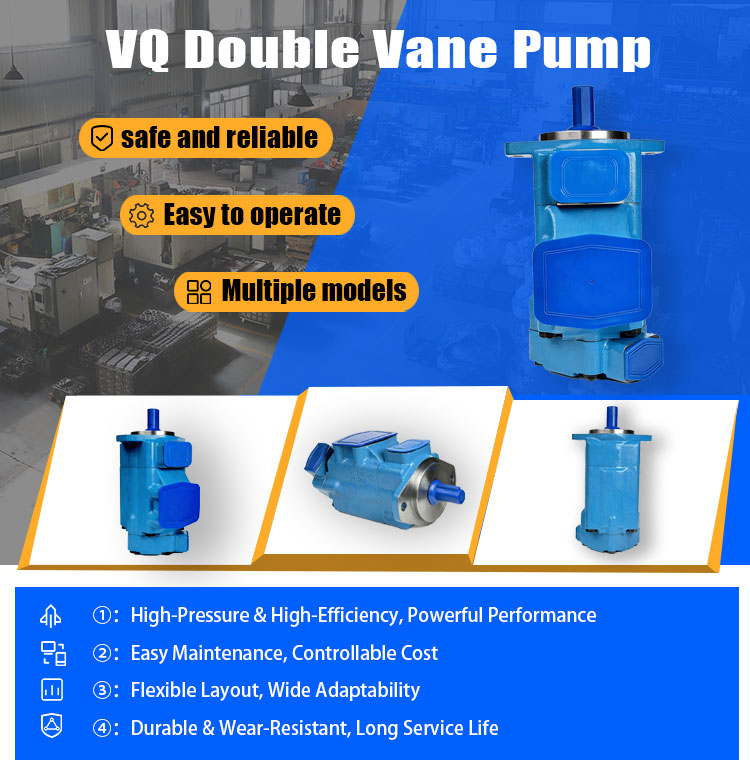
Our vane type hydraulic pump product range covers different configurations for industrial machinery and hydraulic power systems. The appropriate model depends on the required flow rate, working pressure, shaft speed, mounting arrangement, and the way the machine controls its actuators. Reviewing these factors together gives equipment manufacturers a clearer basis for comparing pump options and preparing technical purchasing requirements.
1. Start With the Machine’s Operating Requirements
Before comparing pump models, our engineering team recommends defining the machine’s hydraulic operating conditions. A metal-cutting machine, hydraulic press, agricultural machine, and compact power unit may use similar hydraulic principles, yet their flow demand, pressure cycles, and control requirements can differ considerably.
Prepare the following information during the design or procurement stage:
- Required flow rate: Determine the oil flow needed to achieve the intended actuator speed.
- Working pressure: Identify the pressure required during normal operation and distinguish it from intermittent or peak pressure.
- Drive motor speed: Confirm the expected pump shaft speed and the available motor power.
- Duty cycle: Describe whether the machine operates continuously, intermittently, or through repeated high-load cycles.
- Control requirements: Establish whether the system needs a fixed output or pressure-compensated variable flow.
- Installation constraints: Record the available space, mounting face, shaft connection, and inlet and outlet positions.
These details create a practical specification for comparing models. They also help us identify whether a standard configuration can meet the application requirements or whether a customized arrangement needs further evaluation.
2. Match Pump Displacement With Required Flow
Displacement describes the theoretical volume of oil delivered during one complete shaft revolution. It is commonly expressed in milliliters per revolution (mL/rev). Together with rotational speed and volumetric efficiency, displacement determines the pump’s actual output flow.
For an initial sizing estimate, use the following relationship:
Estimated flow (L/min) = Displacement (mL/rev) × Speed (r/min) × Volumetric efficiency ÷ 1,000
Consider a hypothetical pump with a displacement of 20 mL/rev operating at 1,500 r/min. Assuming a volumetric efficiency of 90%, its estimated output is:
20 × 1,500 × 0.90 ÷ 1,000 = 27 L/min
This calculation is an illustrative sizing example, not a guaranteed output specification for a particular Dengxu model. Actual delivery depends on operating pressure, oil viscosity, temperature, internal leakage, and the pump’s rated operating range.
Flow requirements for different machine designs
| Machine requirement | Design consideration | Information to confirm |
| Rapid actuator movement | Higher flow demand during movement | Required actuator speed and cylinder dimensions |
| Controlled positioning | Predictable flow and suitable control response | Positioning accuracy and circuit arrangement |
| Intermittent hydraulic operation | Variable demand across the operating cycle | Cycle duration and unloading strategy |
| Multiple hydraulic functions | Combined flow demand and operating sequence | Simultaneous actuator movements and priority requirements |
Our recommendation is to calculate flow requirements using the machine’s actual operating cycle. A nominal displacement value alone cannot establish whether a pump will satisfy every stage of operation.
3. Check Working Pressure and Drive Power Together
Flow capacity is only part of the sizing process. The selected pump must also operate within its applicable pressure and speed limits. A model that supplies the required flow at low pressure may not be suitable for a circuit that repeatedly operates under a higher load.
At Dengxu, we encourage customers to distinguish between normal working pressure, intermittent pressure, and short-duration pressure peaks. These values should be checked against the technical specifications of the exact model under consideration.
Estimate the hydraulic power requirement
A useful preliminary calculation for hydraulic output power is:
Hydraulic power (kW) = Pressure (MPa) × Flow (L/min) ÷ 60
For example, a system operating at 10 MPa with a flow rate of 30 L/min requires approximately 5 kW of hydraulic output power before accounting for losses.
The drive motor must supply additional power to compensate for pump and transmission losses. Actual motor sizing should consider the pump’s overall efficiency, starting conditions, operating cycle, and any applicable service factors.
- Confirm the pressure rating at the intended operating speed.
- Check whether the machine experiences frequent pressure peaks or rapid load changes.
- Verify that the motor and coupling can accommodate the required input power and torque.
- Review the relief valve setting and other circuit protections as part of the complete system design.
Pressure and flow must be assessed together. Increasing either value changes the power demand, so both parameters should be documented before finalizing the pump specification.
4. Decide Between Fixed and Variable Displacement
Another important design question concerns how the hydraulic circuit manages changing demand. Fixed-displacement and variable-displacement pumps serve different system requirements, and the appropriate choice depends on the machine’s operating sequence and control architecture.
Fixed-displacement pump configurations
A fixed-displacement pump delivers a nominal volume per revolution. Its theoretical flow changes with shaft speed, while actual delivery is also affected by operating conditions and internal leakage. This arrangement can suit machines with relatively predictable flow demand and circuits designed to manage excess flow appropriately.
During evaluation, consider the following points:
- Whether the machine requires a relatively consistent flow supply.
- How the circuit handles oil flow during idle or low-demand periods.
- Whether the pump’s displacement and operating speed match the actuator requirements.
Variable-displacement pump configurations
Our VP series variable-displacement pumps incorporate pressure-compensation and adjustment provisions designed to respond to hydraulic system demand. Depending on the configuration, output flow can adjust as load conditions change, making this design relevant to equipment that requires variable flow control.
Applications may include metal-cutting machinery, pressure machinery, leather-processing equipment, and hydraulic power units. Suitability still depends on the individual model, its pressure range, the control settings, and the circuit design.
Customers considering this configuration should specify the required pressure adjustment range, expected flow demand, control response, and connection arrangement. These details allow us to assess the relationship between the pump and the machine’s hydraulic circuit.
5. Compare Dengxu Pump Series With Your Application
Different product series address different operating requirements. Rather than assuming that every model within a category offers the same capacity, we recommend reviewing the published specifications for the exact series and configuration.
| Dengxu product series | Published technical information | Design consideration |
| VP series | Variable displacement with pressure and flow adjustment provisions | Assess changing flow demand and pressure-compensation requirements. |
| V20 series | Maximum pressure of 17.2 MPa, as published for the series | Check the specific model’s operating limits, displacement, and mounting interfaces. |
| 35V series | Listed displacement options from 53.3 to 142 mL/rev for the referenced 35VQ configurations | Compare flow requirements with the rated speed and pressure of the selected model. |
The figures above are drawn from our published product information and should not be interpreted as universal ratings for every pump in a series. The 35V displacement figures, for example, relate to the listed 35VQ configurations, while pressure ratings vary by specification.
Our team can help customers compare the relevant product data with their machine requirements. Sharing the intended application and operating conditions makes it easier to narrow the range of suitable configurations before requesting a quotation.
6. Verify Mounting, Shaft, and Hydraulic Connections
A pump can meet the flow and pressure requirements yet remain unsuitable for the machine if its mechanical interfaces do not match. Installation compatibility deserves the same attention as hydraulic performance, particularly for equipment redesigns and replacement projects.
Review the following details against the equipment drawing:
- Mounting flange: Confirm the mounting standard, bolt pattern, and available installation clearance.
- Shaft configuration: Check shaft diameter, keyway or spline details, and coupling compatibility.
- Rotation direction: Verify the required direction against the specified pump model and drive arrangement.
- Port dimensions: Match inlet and outlet connections with the hydraulic lines and fittings.
- Inlet conditions: Assess suction-line dimensions, fluid supply, and inlet pressure requirements.
- Physical envelope: Check the overall dimensions, nearby components, and space required for installation and service access.
We recommend confirming these items through dimensional drawings and model-specific documentation before approving the purchase. Installation procedures should also follow the applicable product instructions, including shaft alignment and coupling requirements.
7. Consider Oil Conditions and the Complete Hydraulic Circuit
Hydraulic fluid and circuit design influence how a pump performs after installation. Oil viscosity, operating temperature, fluid cleanliness, and inlet conditions all affect the operating environment of internal components.
During the engineering review, our customers should establish:
- The hydraulic fluid type and its permitted viscosity range.
- The expected fluid temperature during startup and normal operation.
- The filtration arrangement and required fluid cleanliness.
- The circuit’s relief, unloading, and flow-control provisions.
- The expected operating cycle and any unusual load fluctuations.
These details are particularly relevant to machines operating across different temperatures or changing load conditions. Pump selection should be based on the complete hydraulic circuit rather than treating the pump as an isolated component.
8. Prepare a Clear Specification Before Requesting a Quote
At Dengxu, we work with equipment manufacturers, distributors, and industrial buyers who need pump configurations aligned with their technical and commercial requirements. A well-prepared inquiry helps our team review the application and identify the information that still requires confirmation.
Include the following details in your request:
- Machine type and intended application.
- Required flow rate, working pressure, and shaft speed.
- Fixed- or variable-displacement requirements.
- Drive motor power and shaft connection details.
- Mounting dimensions, rotation direction, and port specifications.
- Hydraulic fluid, temperature range, and duty cycle.
- Expected order volume, delivery destination, and any OEM requirements.
Drawings, photographs of existing installations, and the original pump nameplate can provide additional reference information for replacement or customization inquiries. Our manufacturing and sourcing capabilities support discussions about standard products and OEM requirements, subject to technical review and confirmation.
Build Your Pump Specification Around the Machine
The right hydraulic pump configuration is determined by how well its operating characteristics and physical interfaces match the equipment. Flow demand, pressure limits, drive power, displacement control, shaft geometry, and fluid conditions should all be reviewed before a model is finalized.
At Dengxu, we support customers in comparing pump series and clarifying technical requirements for industrial machinery, hydraulic power units, and other hydraulic applications. Send us your machine specifications or existing pump details to discuss suitable configurations, available technical documentation, and OEM options. A clearly defined application gives both engineering and purchasing teams a sound basis for moving forward with the project.
