 Search
Structural Features and Operating Principles of the YB-D Series
Double-pump configuration and flow combining capability.
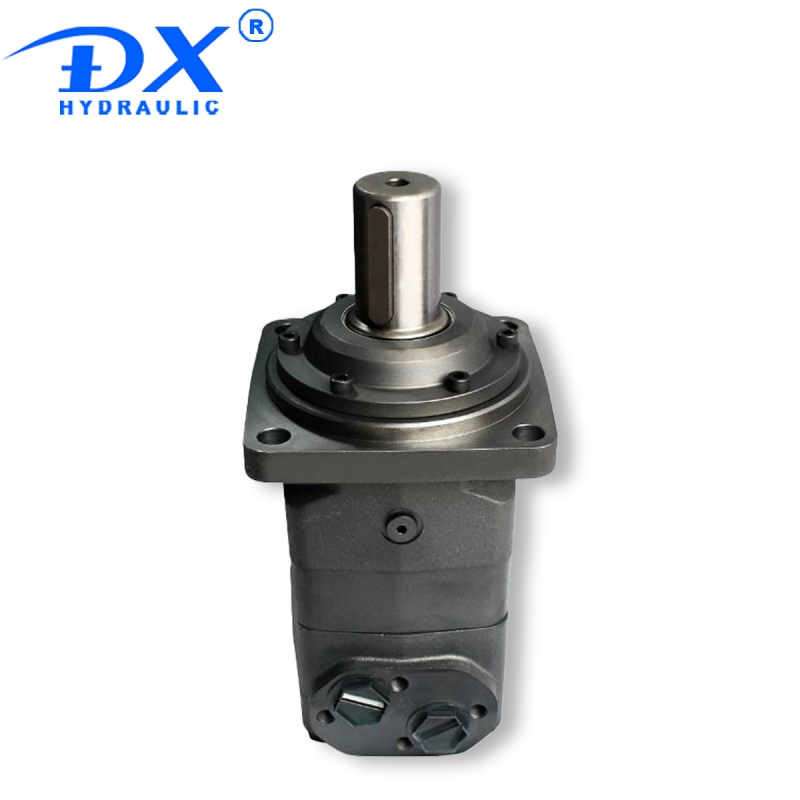
The YB-D series vane pump is a double hydraulic pump, meaning two independent pumping cartridges share a common shaft and housing. Each cartridge has its own rotor, vanes, cam ring, and port plate. The two cartridges are typically designated as the "rod end" and "piston end" sections, or simply as the front pump and rear pump. Displacement combinations vary; common pairings include 32/20 cm³/rev, 50/32 cm³/rev, and 80/50 cm³/rev for the two sections. This configuration allows a single prime mover (electric motor or internal combustion engine) to power two separate hydraulic circuits, or to combine flows for high-speed operations. When both pumps discharge into a common manifold, total flow reaches 180–220 L/min at 1,800 rpm for the larger models. The two sections operate independently, so failure of one pump does not stop the other unless the common shaft breaks.
Vane and cam ring geometry for reduced pulsation.
The YB-D series uses elliptical or compound-curve cam ring profiles rather than the circular profile found in older vane pump designs. A standard elliptical cam ring has two inlet arcs and two outlet arcs per revolution. As the rotor completes one turn, each vane travels through two pumping cycles. This design reduces flow pulsation frequency to 4–6 times the rotational frequency (compared to 2–3 times for single-action pumps). For a pump running at 1,500 rpm, the outlet pressure ripple amplitude is typically ±2 to ±4 bar at 21 MPa operating pressure, measured with a high-frequency pressure transducer. Lower ripple reduces noise—sound pressure levels for YB-D pumps range from 68 to 75 dB(A) at 1 meter under rated conditions, compared to 75–82 dB(A) for single-chamber vane pumps of equivalent displacement. The vanes themselves are made of high-speed steel or cast iron, with tip radii ground to 0.3–0.5 mm to maintain sealing contact against the cam ring.
Pressure balancing and bearing arrangement.
The YB-D series incorporates pressure-balanced port plates and split bearings to extend service life. Two port plates—one on each side of the rotor—capture pressure from the outlet side and direct it to the back of the vanes. This pressure pushes the vanes outward against the cam ring, ensuring sealing at high pressures. A compensation groove connects the vane back area to the outlet pressure through a 1.0–1.5 mm diameter orifice. At pressures above 10 MPa, this system applies approximately 85–95% of outlet pressure to the vane root, generating a net outward force of 15–25 N per vane. Bearings are typically double-row angular contact ball bearings on the drive side and cylindrical roller bearings on the rear. The angular contact bearings absorb residual axial thrust from the pressurized fluid. With proper alignment and clean oil (ISO cleanliness 18/16/13), bearing life under full load reaches 10,000–15,000 hours—approximately 5–7 years of single-shift operation. Symptoms of bearing wear include a low-frequency rumble (50–100 Hz) and a temperature rise at the pump housing above 15°C relative to the inlet oil temperature.
Installation, Maintenance, and Troubleshooting of the YB-D Series
Inlet line and filtration requirements for double pumps.
Because the YB-D series contains two pumping cartridges drawing fluid from a common inlet port, the inlet line must handle the combined flow. For a 80/50 cm³/rev pump at 1,800 rpm, total flow is approximately 234 L/min (80 + 50 = 130 cm³/rev × 1,800 = 234,000 cm³/min = 234 L/min). The inlet pipe inner diameter must be at least 50 mm (2 inches) to maintain flow velocity below 1.2 m/s. A strainer with 150 µm mesh and an open area ratio of at least 4:1 relative to pipe cross-section is installed on the suction line. Vacuum at the pump inlet should not exceed -0.02 MPa (-20 kPa) at full flow; exceeding -0.03 MPa causes cavitation. Installation manuals for the YB-D series specify a maximum inlet vacuum of -0.016 MPa. To achieve this, the oil reservoir must be positioned above or level with the pump centerline whenever possible. For reservoir placement below the pump (common in mobile equipment), a pressurized reservoir (0.03–0.05 MPa by air seal) or a booster charge pump (0.3–0.5 MPa) is required. Field experience shows that 60% of YB-D series failures trace to cavitation caused by undersized inlet lines or clogged strainers.
Mounting orientation and shaft coupling specifications.
The YB-D series can be mounted in horizontal orientation only. Vertical mounting (shaft pointing up or down) is not permitted because the upper pump cartridge would not receive sufficient oil for startup. The housing contains a single drain port located at the lowest point when installed horizontally. For horizontal mounting, the drain port must face downward, allowing air to escape from the housing during filling. The pump shaft is a spline type (JIS SPL or involute spline, module 1.0–1.5, tooth count 14–20). A flexible coupling with matching internal spline is required. Coupling misalignment must stay within 0.10 mm TIR (total indicated runout) radially and 0.05 mm axially. Unlike single-pump designs, the YB-D’s longer housing (typically 280–380 mm from mounting flange to rear cover) amplifies misalignment effects. Radial misalignment of 0.20 mm increases bearing load by approximately 250% compared to 0.10 mm, reducing bearing life to 1,500–2,000 hours. Alignment should be checked with a dial indicator after the coupling is installed and again after the pump reaches operating temperature (50–60°C), as thermal expansion of the pump housing (coefficient 23 × 10⁻⁶ /K for cast iron) can shift alignment by 0.02–0.04 mm.
Pressure compensation and flow adjustment procedures.
Although the YB-D is a fixed displacement pump, many systems incorporate a pressure compensator valve mounted directly on the pump housing. This valve limits maximum system pressure by diverting pump output to tank when the set pressure is reached. The pressure adjustment screw (usually a 4–8 mm hexagon socket) changes spring preload on a spool valve. Turning clockwise increases pressure; each full turn typically changes pressure by 3–7 MPa depending on the valve model. The adjustment range is from 5 MPa to the pump’s rated maximum (21 MPa for standard YB-D, 25 MPa for reinforced versions). A pressure gauge installed within 1 meter of the pump outlet must be monitored during adjustment. The correct procedure is: run the pump against a closed manual valve or deadhead the system through a relief valve, loosen the locknut, adjust the screw in quarter-turn steps, wait 10 seconds for pressure stabilization, then repeat until desired pressure is reached. Never adjust pressure while the pump operates below 40% of rated flow, as this can cause pressure spikes damaging the port plates. The compensator valve includes a small orifice (0.8–1.2 mm diameter) that bleeds flow to prevent pressure oscillation. If this orifice becomes clogged with debris (particles 100–200 µm), the compensator will cause pressure fluctuations of ±3–5 bar at 1–2 Hz frequency. Cleaning the orifice restores normal function.
Troubleshooting loss of flow or pressure in one pump cartridge.
When one cartridge of a YB-D double pump loses flow while the other operates normally, the fault is specific to that cartridge and its associated components. The following diagnostic sequence is recommended:
- Cartridge isolation: Install separate pressure gauges on each pump outlet (many YB-D series housings have two outlet ports). Run the system at 50% of rated pressure. If one gauge shows pressure 30% or more below the other, proceed to Check 2.
- Drive shaft rotation: Ensure the drive shaft rotates freely in the correct direction (clockwise or counterclockwise as marked on the housing). Reverse rotation will not damage the pump immediately but will produce zero flow from both cartridges, not just one.
- Port plate orientation: The port plates for the two cartridges may have been installed incorrectly during previous maintenance. Each port plate has a kidney-shaped slot (inlet) and a pressure slot (outlet). The inlet slot must align with the housing inlet port. Misalignment of 5–10 degrees reduces flow by 40–60%. Remove the cartridge cover to inspect alignment marks. Most YB-D port plates have a center punch mark indicating the top-dead-center position.
- Vane sticking in rotor slots: Deposits of varnish or carbon from degraded hydraulic oil (oxidation number above 0.8 mg KOH/g) can cause vanes to stick in the retracted position. Remove the rotor and inspect each vane; a properly free vane falls out of its slot under its own weight. Vanes requiring prying to remove indicate sticking. Clean slots with a 0.5 mm scraper and polish with 400-grit paper. Replace vanes if edges show rounding (radius over 0.3 mm) or chipping larger than 0.5 mm.
- Cam ring wear measurement: Use an internal micrometer to measure the cam ring’s major diameter (the long axis of the ellipse). Compare to the specification listed in the pump manual. For a YB-D50 (50 cm³/rev), the new cam ring major diameter is typically 68.00–68.02 mm. Wear beyond 68.10 mm reduces flow by 5–10%; beyond 68.20 mm reduces flow by 20–30%, requiring replacement. Cam ring wear is irreversible and cannot be machined because the elliptical profile would change.
