 Search

Finding a suitable hydraulic component supplier is an important part of OEM project management. Although purchase price affects procurement budgets, it does not fully reflect manufacturing capability, product consistency, or long-term cooperation value. A supplier offering a competitive quotation may not necessarily have the technical resources to support customized requirements or maintain consistent product quality across repeat orders.
At DENGXU, we understand the expectations of international equipment manufacturers and hydraulic distributors. Evaluating hydraulic gear pump suppliers requires a broader assessment of production capabilities, inspection procedures, technical communication, and supply arrangements. This article outlines several practical points that OEM purchasing teams can use during supplier evaluation.
1. Examine Manufacturing Capabilities
Production resources influence how a supplier handles standard orders, customized specifications, and repeat production. Buyers should understand whether the supplier manufactures key components internally or relies on external processing facilities.
Several manufacturing details deserve attention:
- Machining equipment: Check the available CNC machines and precision processing equipment used for pump housings, gears, and shafts.
- Assembly facilities: Review how internal components are assembled and how dimensional tolerances are controlled.
- Production capacity: Discuss the supplier's ability to handle your expected order schedule and repeat requirements.
- Technical development: Confirm whether the supplier can evaluate drawings, samples, and customized pump specifications.
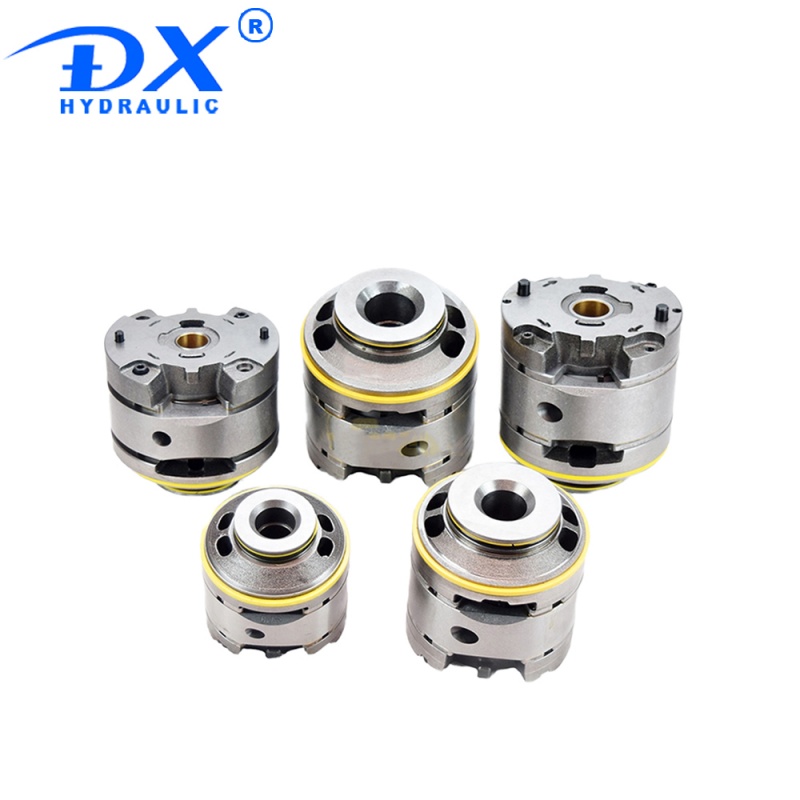
At DENGXU, we have our own machining factory and an R&D team supporting hydraulic product development. Our manufacturing resources cover hydraulic vane pumps, gear pumps, piston pumps, valves, and related components. This product experience allows us to communicate with OEM customers about different hydraulic system requirements.
2. Review Quality Control Procedures
Gear pump performance depends on component accuracy, assembly consistency, and manufacturing control. Small dimensional variations in gear components or housing clearances may influence internal leakage, volumetric efficiency, and operating noise.
Before establishing a supplier relationship, OEM buyers should ask about quality inspection at different production stages.
- Incoming inspection: Verify the inspection of raw materials and purchased components.
- Machining inspection: Check critical dimensions, surface conditions, and processing accuracy.
- Assembly inspection: Review component matching, sealing arrangements, and assembly procedures.
- Final testing: Discuss pressure, flow, leakage, and operational testing according to the applicable product specifications.
We recommend asking suppliers to explain their inspection methods rather than relying entirely on general quality statements. A documented procedure gives purchasing and engineering teams a clearer understanding of how product conformity is controlled.
3. Verify Technical Compatibility Before Ordering
A hydraulic gear pump must match the equipment's hydraulic circuit and mechanical installation requirements. Ordering according to a product name alone may create compatibility problems during assembly.
OEM purchasing teams should prepare a complete technical specification covering:
- Pump displacement, expressed in cm³/rev.
- Rated and ideal operating pressure.
- Required rotational speed and rotation direction.
- Shaft design, including keyed or splined connections.
- Mounting flange dimensions and port configuration.
- Hydraulic oil type and operating temperature.
For example, two gear pumps may share the same displacement but have different shaft dimensions, mounting arrangements, or port positions. These differences matter during equipment integration.
At DENGXU, we encourage customers to provide existing pump drawings, nameplate information, or physical samples. Our team can review the available specifications and discuss suitable configurations for the intended application.
4. Assess Customization and OEM Support
Standard catalog products may not satisfy every equipment manufacturer's design requirements. Some OEM projects involve special mounting dimensions, alternative shaft connections, customized port arrangements, or specific product identification.
A capable supplier should be able to discuss these requirements and evaluate their manufacturing feasibility.
Before starting a customized project, buyers should confirm:
- Whether technical drawings and samples can be reviewed.
- Whether dimensional modifications can be evaluated.
- Whether product labels, packaging, and branding can be customized.
- Whether technical changes can be documented and approved before production.
Our DENGXU team provides OEM customization support based on customer drawings and samples. We communicate with customers about technical details before confirming the proposed manufacturing arrangement.
5. Evaluate Batch Consistency and Repeat Orders
OEM manufacturers often require the same pump specifications across multiple purchasing cycles. Differences between production batches may create additional inspection work, assembly adjustments, and replacement part management issues.
Buyers should therefore examine how suppliers manage product specifications and production records.
Useful questions include:
- Are approved drawings and specifications retained for repeat orders?
- Are critical dimensions checked consistently during production?
- Can inspection records be provided for relevant batches?
- How are engineering changes communicated to customers?
We believe clear technical records and consistent communication are important parts of long-term OEM cooperation. They help both parties maintain the agreed product configuration throughout the purchasing process.
6. Compare Delivery Arrangements and Communication
Supply arrangements can influence OEM production planning, especially for manufacturers coordinating several hydraulic components within the same assembly schedule.
Instead of comparing quotations alone, procurement teams should discuss production scheduling, order confirmation, packaging, export documentation, and shipment arrangements.
Technical communication also deserves attention. A supplier should be able to respond clearly to questions about pump dimensions, pressure ratings, installation requirements, and product testing.
At DENGXU, our export experience helps us communicate with international customers about product specifications and order arrangements. We also support discussions involving hydraulic pumps, valves, and related components within the same equipment project.
7. Consider After-Sales Support and Total Purchasing Cost
The purchase price represents only part of the overall cost of sourcing hydraulic gear pumps. Inspection expenses, installation adjustments, product replacement, and equipment downtime may also affect the purchasing budget.
OEM buyers should review the supplier's after-sales arrangements before placing regular orders.
- Technical assistance: Confirm whether product installation and specification questions can be addressed.
- Warranty conditions: Review coverage, claim procedures, and supporting documentation.
- Replacement support: Discuss the availability of corresponding replacement models and components.
- Issue handling: Establish how quality concerns and product feedback will be reviewed.
Comparing these factors provides a more realistic picture of the overall cooperation cost than focusing on unit price alone.
Build OEM Cooperation Around Verifiable Capabilities
Evaluating hydraulic gear pump suppliers requires a combination of technical, manufacturing, and commercial considerations. Production equipment, quality inspection, specification compatibility, customization resources, batch consistency, and after-sales communication all influence the success of an OEM purchasing project.
At DENGXU, we serve international customers with hydraulic gear pumps, vane pumps, piston pumps, and related hydraulic components. With our own machining factory, R&D resources, and experience in hydraulic product exports, we work with equipment manufacturers and distributors on standard and customized requirements.
Contact DENGXU with your pump drawings, technical specifications, or sample requirements. Our team will be glad to discuss product configurations and provide information to support your OEM sourcing project.
