
 Search
What are the components of the YB1 Series Vane Pump?
The YB1 vane pump operates on the principle of a rotating cam ring and sliding vanes to create changing volume chambers. Its key internal and external components include:
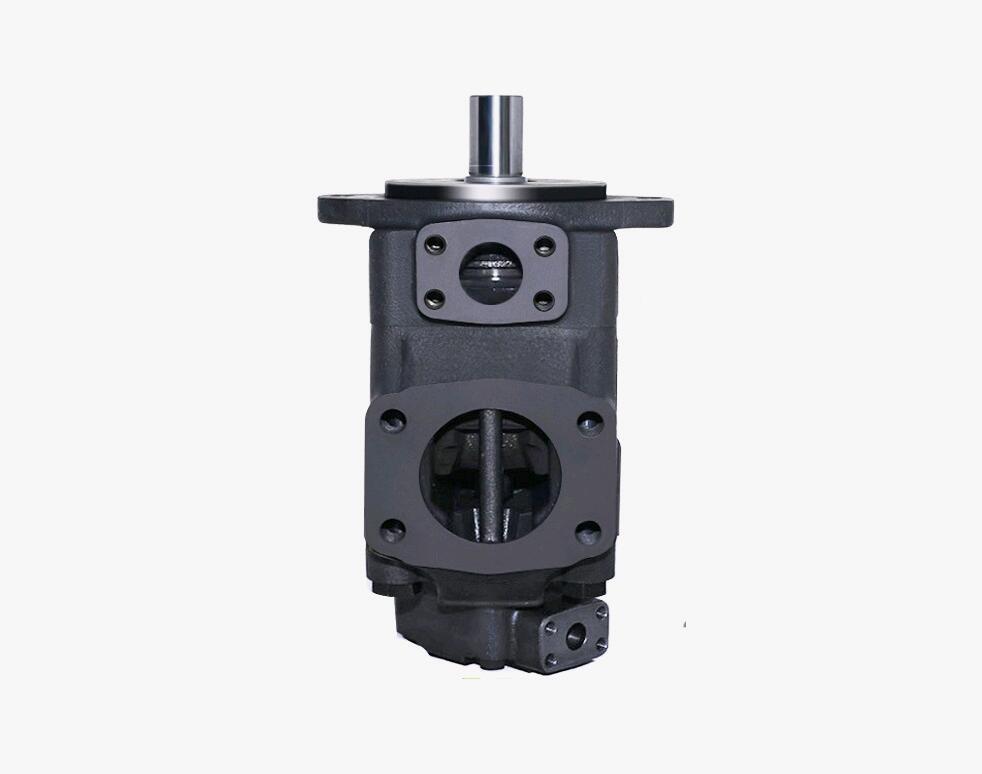
Pump Body (Housing): This is the main structural casing, typically made of cast iron or aluminum alloy, which contains the internal assembly and provides mounting and porting interfaces.
Rotor: This is the central driven shaft with radial slots. It is connected to the prime mover (e.g., an electric motor) and rotates within the cam ring.
Vanes: These are rectangular blades, usually made of phenolic resin or composite materials, that slide freely within the rotor's slots. They seal against the inner surface of the cam ring.
Cam Ring (Stator Ring): This is an oval-shaped or elliptical ring fixed inside the pump body. Its inner contour forces the vanes to extend and retract as the rotor turns, creating the pumping chambers.
Side Plates (Pressure Plates or Port Plates): These are two critical wear plates, one on each side of the rotor and vane assembly. They contain the kidney-shaped inlet and outlet ports and serve as the axial sealing surfaces for the pumping chambers. In the YB1 design, these plates are hydraulically balanced to reduce wear.
Shaft and Seals: The drive shaft is supported by bearings and extends through the pump housing. A shaft seal, often a lip seal, prevents hydraulic fluid from leaking out along the shaft.
Inlet and Outlet Ports: These are threaded or flanged connections on the pump body for the suction and pressure lines.
Why does the YB1 Series Vane Pump exist?
The development and continued use of the YB1 series pump are based on meeting specific requirements in mid-pressure hydraulic applications.
Providing Balanced Hydraulic Pressure
A defining feature of the YB1 design is its balanced pressure plate system. Hydraulic pressure from the outlet port is directed behind the side plates, pushing them with equal force against the ends of the rotor and vanes. This balance minimizes uneven axial wear and internal leakage across a range of operating pressures, contributing to stable volumetric efficiency and a longer service life compared to some unbalanced vane pump designs.
Delivering Relatively Pulsation-Free Flow
The specific geometry of the cam ring and the use of multiple vanes allow for an overlap in the pumping action. This means that as one chamber is finishing its discharge cycle, another is beginning, which results in a smoother, more continuous flow output than a gear pump of similar size. This characteristic can be beneficial for systems where flow ripple is a concern.
Serving as a Cost-Effective Fixed-Flow Source
The YB1 is a fixed-displacement pump. Its output flow is directly proportional to its shaft speed. This design simplicity, combined with robust construction from common materials, makes it a cost-effective choice for applications where a constant flow is required, such as powering hydraulic cylinders for clamping, simple press circuits, or as a charge pump in more complex systems.
Disadvantages of the YB1 Series Vane Pump
Despite its utility, the YB1 series pump has several well-defined operational constraints.
Its sensitivity to fluid contamination is a primary limitation. The small clearance between the vane tips and the cam ring, and between the vanes and rotor slots, is critical for maintaining efficiency. Abrasive particles in the hydraulic fluid can cause rapid scoring and wear in these areas, bring about a significant drop in pump performance and pressure capability. This necessitates rigorous filtration.
The pump operates within a defined pressure and speed range. The YB1 series is generally suited for medium-pressure applications. Operating consistently at or near its rated pressure can accelerate wear. Similarly, its design limits rotational speed; excessive speed can cause the vanes to not follow the cam ring contour reliably due to centrifugal force, bring about cavitation and loss of prime.
It has limited viscosity tolerance. The pump is designed to operate within a specific range of hydraulic oil viscosities. Fluid that is too thick (cold start conditions) can cause high starting torque and poor vane extension, while fluid that is too thin (hot conditions) can increase internal leakage and reduce volumetric efficiency.
