
 Search
Noise reduction has become an important consideration in modern hydraulic equipment, especially in industrial environments where machines operate continuously near operators or precision processes. A Low-noise Vane Pump is designed to reduce pressure ripple, vibration, and hydraulic sound while maintaining stable fluid delivery. However, a common engineering question remains: does reducing noise performance create additional stress on internal components during frequent high-load cycles?
The relationship between noise control and durability is more complex than a simple trade-off. A properly designed low-noise vane pump does not necessarily experience reduced service life. Instead, durability depends on how noise-reduction methods interact with pressure balance, internal clearances, material selection, and operating conditions.
Research on vane pump noise indicates that hydraulic noise is closely associated with pressure pulsation, flow ripple, and mechanical vibration generated during pump operation. Reducing these sources requires careful control of internal pressure changes and component movement.
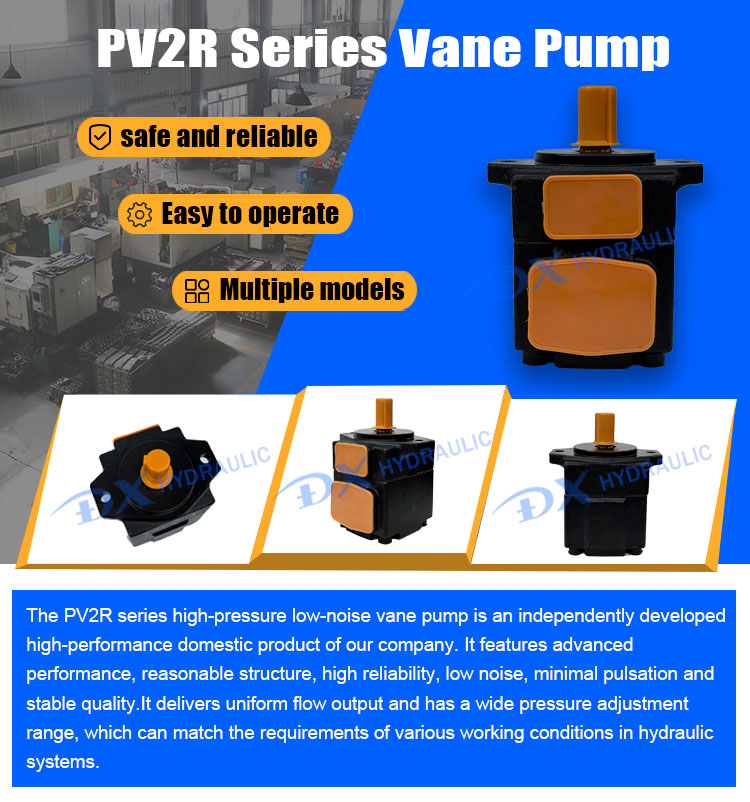
Why low-noise design attracts attention in hydraulic systems
Traditional hydraulic pumps generate noise through several mechanisms. Some noise comes from mechanical contact between moving parts, while another portion comes from hydraulic pressure fluctuations inside pumping chambers.
A vane pump creates flow through repeated expansion and compression cycles. During every rotation, vanes move along the cam ring profile, creating changes in chamber volume and outlet pressure.
- Pressure ripple during oil discharge
- Vane impact and sliding movement
- Internal leakage fluctuation
- Structural vibration transmitted through the housing
Low-noise designs aim to control these sources rather than simply reduce sound after it occurs. Many designs use improved hydraulic balancing, optimized vane geometry, and modified port timing to achieve smoother pressure transitions.
Does reducing pressure pulsation affect component strength?
Pressure pulsation is one of the major contributors to hydraulic noise. Reducing pulsation can actually decrease repeated stress on internal parts, especially during long operating cycles.
Every pressure fluctuation creates a small force change on components such as:
- Rotor assembly – experiences changing hydraulic forces during rotation
- Vane tips – maintain continuous contact with the cam ring surface
- Side plates – withstand repeated pressure loading
- Pump housing – transfers vibration forces to the machine frame
A smoother pressure profile can reduce cyclic stress concentration. This means noise reduction and durability improvement can sometimes support the same engineering goal rather than compete with each other.
Where durability concerns may appear under high load cycles
The durability question becomes more complicated under demanding operating conditions. High-load cycles expose any weakness in pump design or application matching.
A Low-noise Vane Pump operating continuously under high pressure must maintain precise internal conditions. Several factors influence long-term reliability:
- Excessive pressure level – increases mechanical loading on internal surfaces
- High rotational speed – increases vane movement frequency and friction cycles
- Frequent pressure changes – creates repeated stress variation
- Poor oil condition – accelerates wear on precision components
These challenges are related to operating conditions rather than low-noise technology itself.
How noise-control structures influence internal wear
Low-noise vane pumps usually rely on detailed internal optimization. The purpose is to make oil movement and mechanical motion smoother.
Common design approaches include:
- Improved inlet and outlet port geometry
- Balanced hydraulic loading around the rotor
- Controlled vane movement inside rotor slots
- Reduced pressure transition shock
These improvements can lower vibration levels and reduce unnecessary mechanical impact. Studies on pressure-balanced vane pumps show that pressure pulsation characteristics are closely connected with fluid-borne noise generation, meaning smoother hydraulic behavior directly affects acoustic performance.
Can quieter operation hide early durability problems?
One interesting challenge with quieter hydraulic equipment is that sound may no longer provide an obvious warning signal. Operators sometimes rely on abnormal noise as an early indication of internal problems.
A quieter pump may continue producing normal sound levels even while other signs appear, such as:
- Gradual pressure instability
- Reduced flow output
- Increased oil temperature
- Small changes in actuator response
This does not mean low-noise designs are less reliable. It means hydraulic monitoring methods become more important in high-cycle applications.
High-load applications that test vane pump durability
Certain industrial environments place continuous demands on hydraulic pumps. These systems require stable operation over thousands of pressure cycles.
- Injection molding machines
- Metal processing equipment
- Automation production systems
- Hydraulic power units
- Mobile machinery
A pump used in these applications must maintain accurate clearance control and consistent lubrication performance. Low-noise operation is only one part of the overall design requirement.
The role of materials and manufacturing precision
Durability under high load cycles depends heavily on component quality. Noise-reduction features cannot compensate for poor material properties or inaccurate machining.
Important factors include:
- Wear-resistant vane materials for continuous sliding contact
- Precision rotor processing for stable chamber volume
- Accurate side clearance control to reduce leakage changes
- Balanced internal pressure design to reduce uneven loading
Finding the balance between quiet operation and long service life
The idea that quieter pumps sacrifice durability comes from the assumption that additional noise-control structures add complexity or reduce strength. Modern hydraulic design shows a different picture.
A well-engineered Low-noise Vane Pump can maintain durability during high-load cycles because the same features that reduce pressure fluctuation may also reduce vibration and mechanical stress.
Final perspective on low-noise pump durability
Noise reduction does not automatically shorten the working life of a vane pump. The real durability factors are pressure conditions, operating speed, oil quality, internal precision, and application demands.
A low-noise design that controls pressure ripple and mechanical vibration may provide a smoother operating environment for internal components. Under high-load cycles, reliable performance depends on how well the pump design manages hydraulic forces while maintaining accurate movement of every precision part.
