
 Search
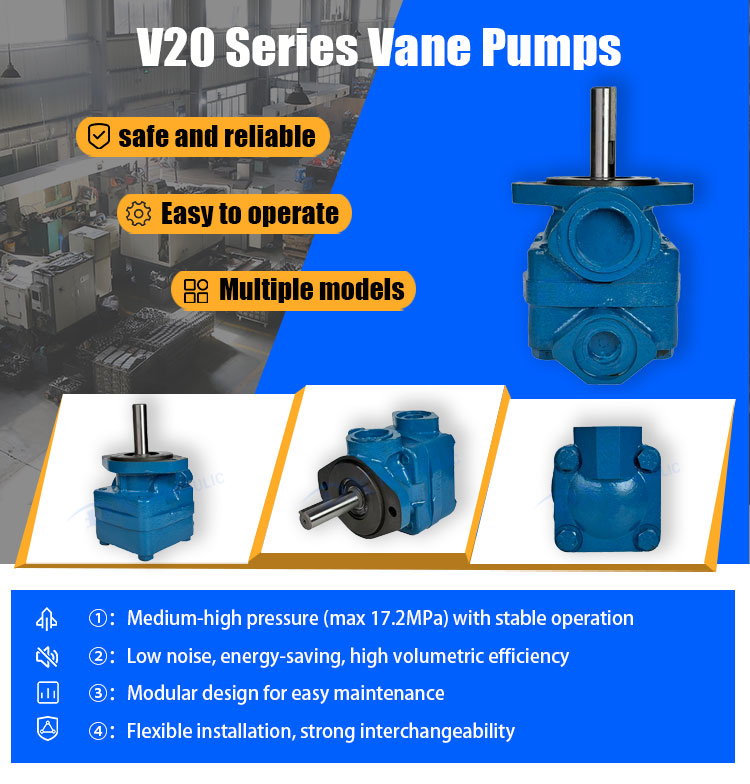
Modern hydraulic equipment continues moving toward smaller dimensions, higher power density, and more integrated system layouts. This trend has increased demand for the compact hydraulic vane pump, a solution designed to deliver reliable hydraulic power while occupying limited installation space.
However, reducing physical size creates new engineering challenges. A smaller pump body means reduced internal volume, shorter flow passages, and tighter packaging around suction and discharge circuits. These design characteristics may influence inlet conditions and increase the possibility of hidden cavitation problems under demanding operating conditions.
Cavitation is generally associated with insufficient inlet pressure, restricted suction flow, or excessive local pressure drop inside the pump. Hydraulic pump studies commonly identify suction restrictions, improper inlet design, and operating conditions as major factors that create vapor bubbles inside hydraulic fluid.
The connection between compact design and cavitation risk
A compact structure does not automatically create cavitation. The challenge comes from how much hydraulic performance is required from a smaller internal space.
Traditional hydraulic systems often provide generous space for inlet passages, reservoirs, and piping arrangements. Compact equipment may require shorter suction lines, smaller reservoirs, or closer component placement, which changes the way hydraulic oil enters the pump.
- Reduced inlet passage diameter can increase fluid velocity
- Limited internal volume may reduce pressure recovery space
- Short installation distance can create sharper flow transitions
- Higher power density places greater demand on suction performance
The result is a situation where a pump may operate normally under light loads but show cavitation symptoms during high-speed or high-flow conditions.
Why suction conditions become more sensitive in smaller pumps
The inlet side of a vane pump plays an important role in filling the expanding chambers between the rotor, vanes, and cam ring. The oil must enter quickly enough to replace the increasing chamber volume during rotation.
A compact hydraulic vane pump often operates with high rotational speed relative to its physical size. This creates a greater demand for rapid oil filling during each rotation cycle.
Potential suction limitations include:
- Restricted inlet channels – narrow passages create additional pressure losses
- Short fluid filling time – high-speed rotation reduces available filling duration
- Poor reservoir arrangement – insufficient oil supply affects inlet stability
- Excessive suction velocity – higher velocity can reduce local pressure
Hydraulic vane pump failure analysis often links cavitation with excessive vacuum conditions at the pump inlet, which can cause vapor bubbles and damage internal surfaces during collapse.
Hidden cavitation does not always create obvious noise
Many operators associate cavitation with loud mechanical noise, but early-stage cavitation may remain difficult to identify. A compact pump installed inside a machine enclosure can hide small pressure fluctuations or unusual operating sounds.
Before severe damage appears, the system may display several subtle signals:
- Gradual reduction in output flow
- Small pressure fluctuations during continuous operation
- Increased hydraulic oil temperature
- Irregular actuator movement
- Higher vibration levels around the pump housing
Because these symptoms can resemble other hydraulic problems, cavitation inside a small vane pump is sometimes discovered only after internal wear has progressed.
How internal geometry influences cavitation behavior
The internal structure of a vane pump determines how smoothly hydraulic oil moves through the pumping chambers. Even small changes in port geometry, rotor design, and vane movement can affect pressure distribution.
Important internal design factors include:
- Suction port shape – smoother flow paths reduce sudden pressure drops
- Rotor chamber design – proper expansion timing supports oil filling
- Vane movement control – stable vane extension improves chamber sealing
- Clearance management – precise gaps balance leakage and lubrication
Technical studies on vane pump suction port design have shown that inlet geometry plays an important role in reducing cavitation during high-speed operation.
Does smaller size always mean higher cavitation possibility?
The relationship is not simply determined by external dimensions. A well-designed compact vane pump can achieve stable performance through optimized hydraulic passages and accurate internal manufacturing.
The actual risk depends on the combination of:
- Pump displacement
- Operating speed
- Inlet pressure condition
- Hydraulic oil viscosity
- System piping layout
A smaller pump working within suitable operating parameters may perform reliably, while a larger pump installed with poor suction conditions can also experience cavitation.
Applications where compact vane pumps face greater challenges
Space-saving hydraulic designs are commonly used in equipment where installation volume is limited but stable motion is still required.
- Mobile hydraulic machinery
- Industrial automation equipment
- Material handling systems
- Compact machine tools
- Special-purpose hydraulic units
These applications often involve frequent load changes, variable operating speeds, and limited installation space, making inlet performance especially important.
Design approaches that reduce cavitation exposure
Engineers usually focus on improving the entire hydraulic circuit rather than changing only the pump structure. A reliable compact system requires cooperation between pump design and installation conditions.
- Improved suction routing helps maintain stable inlet pressure
- Appropriate hose sizing reduces unnecessary flow resistance
- Optimized reservoir design supports consistent oil supply
- Proper operating parameters prevent excessive demand on the pump
Final thoughts on compact pump cavitation risks
Space limitations can increase cavitation sensitivity in a compact hydraulic vane pump, but the issue comes from the interaction between size, flow conditions, and system design rather than compact dimensions alone.
As hydraulic equipment becomes smaller and more powerful, controlling inlet conditions becomes increasingly important. Understanding how suction performance, internal geometry, and operating demands interact helps engineers create compact systems that maintain stable hydraulic performance without unexpected cavitation problems.
