
 Search
A hydraulic system may need high pressure for one operation and substantial flow for another. Running both functions through a single pump can make circuit design more complicated, particularly on machinery that performs several hydraulic actions during the same operating cycle. This is where a High Pressure Double Vane Pump offers an interesting product configuration: two pumping sections are installed in a common housing and driven by a shared shaft.
The appeal is not simply having “two pumps in one.” The real engineering value comes from how the two pump sections can be assigned to different hydraulic functions. Depending on the circuit, each outlet can supply a separate actuator, or the two outputs can be combined to provide greater flow. This gives equipment designers more options without requiring two independent drive systems.
What Makes a Double Vane Pump Different?
A conventional single vane pump has one pumping section and one primary hydraulic output. A double vane pump incorporates two pumping sections within the same assembly. Danfoss describes its double vane configuration as a way to use a single power source for two separate hydraulic circuits or combine both sections for increased volume.
- Shared drive: Both pump sections can operate from the same shaft and prime mover.
- Separate outlets: Each section can provide hydraulic flow to an independent circuit.
- Combined delivery: The outputs can be arranged to support higher-flow requirements where the circuit permits.
- Compact packaging: Two pumping functions can occupy less installation space than two separately mounted pump assemblies.
This architecture becomes particularly useful on mobile equipment, machine tools, presses, agricultural machinery, and other systems where hydraulic functions have different operating requirements.
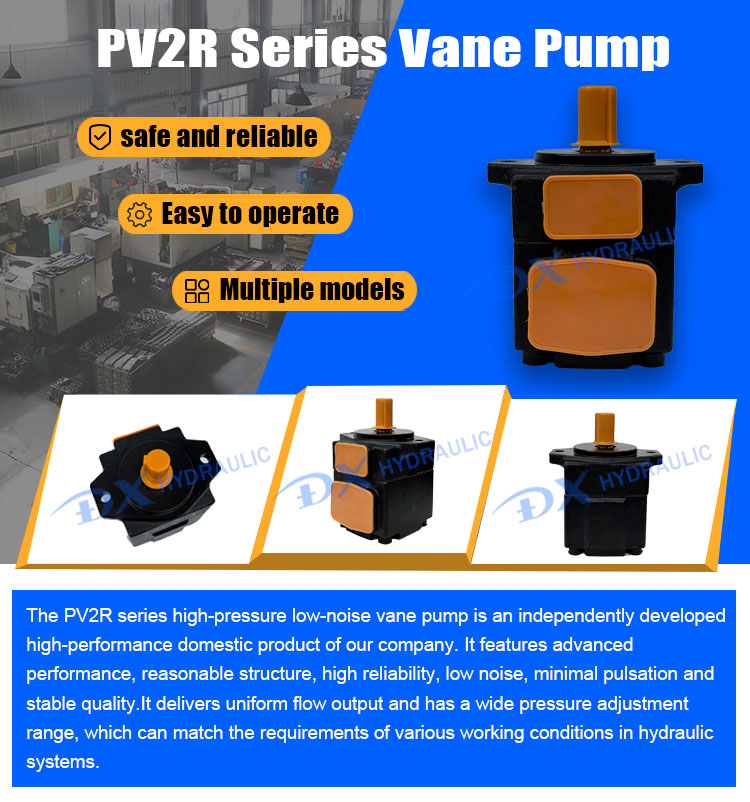
Is Dual-Circuit Control More Important Than Pressure Rating?
Pressure capability remains an important specification, but pressure alone does not explain the value of a double pump. A machine may require two hydraulic functions with very different flow and pressure demands. A dual-pump arrangement gives the designer an opportunity to allocate these requirements separately.
| Hydraulic Requirement | Possible Pump Arrangement | Typical Product Benefit |
| Two independent actuators | Separate pump outlets | Independent circuit supply |
| High-flow movement | Combined pump outputs | Greater available flow |
| Different pressure requirements | Separate circuit control | Pressure can be managed independently |
| Limited installation space | Common double-pump housing | More compact packaging |
| Single mechanical drive | Shared shaft | Reduced drive-system complexity |
Hydraulic double vane pump documentation describes two main circuit concepts: independent circuits and combined flow. A series arrangement can also be used in particular designs, depending on the hydraulic architecture and pressure requirements.
Why Separate Circuits Can Change Machine Design
Consider a machine that needs a rapid actuator movement during one stage and strong holding force during another. A single pump has to accommodate both requirements through valves and circuit controls. A double pump can divide the hydraulic work between two sections.
Clamping and Feeding Functions
A machine tool may need one hydraulic circuit for clamping while another circuit controls a feed or positioning function. These functions do not necessarily require identical pressure and flow characteristics.
Using a double vane configuration allows the two pump sections to be specified according to their respective hydraulic demands. Yuken's published PV2R double-pump configurations, for example, combine different displacement sections such as PV2R1 + PV2R2 or PV2R2 + PV2R4, with different pressure ratings assigned to the pump stages.
Rapid Movement and High-Pressure Operation
Another circuit concept uses a larger-flow pump section during rapid movement and a smaller section during higher-pressure operation. A published hydraulic circuit example describes a low-pressure, high-flow pump working alongside a high-pressure, lower-flow pump. A sequence valve can unload the high-flow section after system pressure reaches a specified point, allowing the smaller pump section to continue supplying the higher-pressure function.
This arrangement shows why the value of a double vane pump can extend beyond simply increasing flow. The two sections can perform different hydraulic jobs during different stages of machine operation.
How High Pressure Changes the Product Requirements
A High Pressure Double Vane Pump must be evaluated according to both its pressure rating and the displacement of each pump section. Increasing pressure places greater demands on the housing, shaft, bearings, seals, cartridge assembly, and hydraulic connections.
Available product ranges demonstrate how specifications vary between series. For example, Insight Hydraulics lists an IH6CC double vane pump range with displacement from 22 to 200 cm³/rev and a max pressure rating of 270 bar. Its IH6DC series covers approximately 58 to 291 cm³/rev, also with a listed max pressure of 270 bar.
Other double vane pump ranges reach different pressure levels. A Sarva Hydraulik product table lists S6CC models at up to 300 bar and S7BBS models at up to 350 bar, with displacement and speed varying by frame size.
Product Parameters Buyers Should Compare
- Pump displacement P1 and P2: The two sections do not necessarily need identical displacement.
- Continuous pressure: Check the pressure rating of each pump section rather than relying on a general pump-family specification.
- Maximum speed: Shaft RPM affects flow, power demand, and operating conditions.
- Shaft configuration: Keyed and splined shaft options may be available depending on the series.
- Mounting flange: SAE B, SAE C, and other mounting standards appear across different double-pump product families.
- Port arrangement: Outlet orientation and connection dimensions should correspond with the machine layout.
- Rotation direction: Clockwise and counterclockwise configurations should be verified before ordering.
Some high-pressure double vane designs also use reinforced bearing arrangements and multiple shaft seals. A published HT6GCC series, for example, is described as a fixed-displacement, balanced double vane pump designed for higher loads, using double-row ball bearings with needle bearings and two shaft seals.
Does Combining Two Pump Sections Always Make Sense?
Not necessarily. A double pump is useful only when the hydraulic circuit benefits from having two pump sections. A simple system with a single actuator and predictable flow requirements may not need this architecture.
The configuration becomes more attractive where machinery has:
- Two hydraulic circuits operating from the same prime mover.
- Different pressure and flow requirements.
- Rapid and high-force operating stages.
- Limited space for separate pump assemblies.
- A need to reduce the number of independent drive components.
Beyond “Two Pumps in One Housing”
The phrase “double vane pump” can make the product sound like a simple combination of two conventional pumps. The actual engineering advantage is more nuanced. A common shaft, separate pump sections, different displacement options, and flexible circuit arrangements can allow machine builders to distribute hydraulic functions more intelligently.
For high-pressure machinery, this distinction matters. A High Pressure Double Vane Pump is not valuable simply because it contains two pumping sections. Its value comes from the ability to match those sections with the pressure, flow, timing, and circuit requirements of the machine.
Final Takeaway
Dual-circuit control can indeed be a major reason to consider a double vane pump, but it is not the only consideration. The product's displacement combination, pressure capability, speed range, shaft design, mounting configuration, and outlet arrangement all determine whether the pump fits a specific hydraulic system.
For equipment designers and hydraulic buyers, the more useful comparison is therefore not simply “single pump versus double pump.” The better question is how each pump section will be used. Once the hydraulic functions are mapped to their pressure and flow requirements, the advantages of a High Pressure Double Vane Pump become much easier to evaluate.
