
 Search
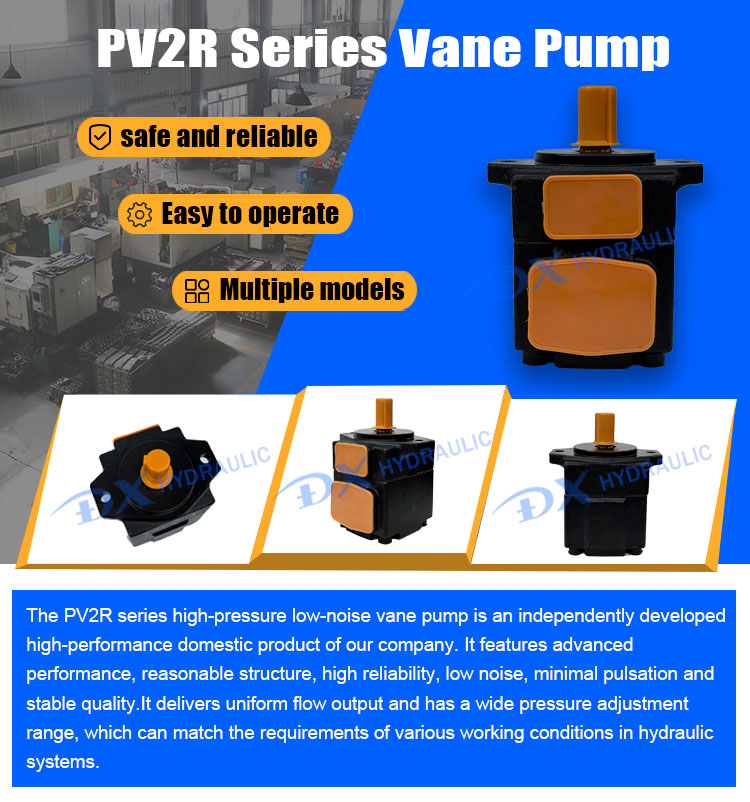
Mobile equipment continues to move toward smaller structures, reduced weight, and improved power utilization. From agricultural machines to compact construction equipment, engineers are looking for hydraulic components that provide reliable performance without adding unnecessary mass. A lightweight hydraulic vane pump has become an interesting option for applications where installation space, machine weight, and hydraulic performance need to be balanced.
Traditional hydraulic systems often use heavy pump assemblies designed for demanding industrial environments. However, mobile machines face different challenges. Equipment such as compact loaders, utility vehicles, lifting platforms, and agricultural attachments must carry hydraulic power while maintaining mobility and fuel efficiency. Vane pump technology has been used in mobile hydraulic applications for decades because of its compact structure, smooth flow output, and flexible configuration options.
The key question is whether reducing pump weight affects durability and working capability. The answer depends on pump design, operating pressure, displacement, material selection, and the requirements of the hydraulic system.
Why Weight Matters in Mobile Hydraulic Systems
Mobile equipment manufacturers constantly evaluate component weight because every kilogram influences machine transportation, balance, energy consumption, and overall design flexibility. Hydraulic components are often installed in limited spaces, making size and weight important design factors.
A lightweight vane pump can provide several practical advantages:
- Simplified installation: Lower pump weight makes assembly easier and reduces mounting structure requirements.
- Better space utilization: Compact dimensions allow more flexible machine layouts.
- Reduced system load: A lighter hydraulic unit can support overall equipment weight management.
- Improved mobility: Smaller machines can maintain better handling characteristics.
Manufacturers have developed compact vane pump designs with reduced dimensions while maintaining suitable pressure capability for mobile applications. Some mobile vane pump series are designed specifically around compact size, multiple mounting options, and a broad range of displacement choices.
Lightweight Hydraulic Vane Pump Performance Overview
| Parameter | Typical Range | Influence on Mobile Equipment |
| Displacement | 2.5–200+ cc/rev depending on design | Determines hydraulic flow capacity |
| Pressure Rating | Medium pressure classes up to around 200–300 bar for certain designs | Affects load handling capability |
| Housing Material | Aluminum alloy or cast iron options | Balances weight and strength |
| Installation Type | Flange mount, shaft mount, compact configurations | Supports different machine structures |
Actual specifications vary by pump model and application requirements. For example, some compact vane pump designs provide displacement options suitable for small machinery, while higher-performance mobile versions use reinforced structures to handle greater pressure levels.
Where Can Lightweight Vane Pumps Be Applied?
The suitability of a lightweight pump depends largely on the working environment. Mobile equipment usually requires hydraulic systems that combine compact installation, stable output, and resistance to changing loads.
1. Compact Construction Machinery
Small construction machines operate in areas where size limitations are common. Mini loaders, compact excavators, and specialized attachments require hydraulic power but cannot accommodate oversized components.
A Lightweight Hydraulic Vane Pump can support functions such as:
- Hydraulic attachments
- Steering systems
- Auxiliary hydraulic circuits
- Small lifting mechanisms
Compact pump dimensions help equipment designers maintain a smaller machine footprint while keeping hydraulic functions available.
2. Agricultural Equipment
Agricultural machinery often works under variable loads and outdoor conditions. Tractors, harvesters, and farming attachments require hydraulic systems that can deliver consistent flow while remaining easy to integrate.
Lightweight vane pumps are suitable for applications where:
- Hydraulic demand is moderate.
- Machine weight reduction is valuable.
- Stable operation is required.
The compact structure helps agricultural equipment manufacturers optimize available space for other components such as fuel systems, batteries, and control units.
3. Mobile Power Units and Utility Machines
Portable hydraulic power units, maintenance vehicles, and utility machines often require pumps that are easy to transport and install. A lighter pump assembly can simplify equipment design while providing sufficient hydraulic output for specific tasks.
Mobile vane pump designs are available in different configurations, including single and double pump structures, allowing engineers to match hydraulic output with machine requirements.
Does Lower Weight Affect Pump Durability?
A common concern is whether a lighter pump sacrifices strength. Weight reduction does not automatically mean lower reliability. The key factor is how the pump achieves weight savings.
Modern lightweight designs may use:
- Optimized housing structures: Material is removed from non-critical areas while maintaining mechanical strength.
- Improved internal components: Precision rotor and vane designs help maintain stable operation.
- Balanced hydraulic design: Pressure-balanced structures reduce uneven forces on internal parts.
For applications requiring higher pressure and longer service periods, engineers may choose reinforced pump versions with stronger housings and improved internal designs. Some mobile vane pumps are engineered with compact envelopes while maintaining pressure ratings suitable for demanding equipment.
Important Factors Before Installing a Lightweight Pump
A lightweight hydraulic pump should be evaluated based on the complete hydraulic system rather than weight alone. Incorrect matching may result in insufficient flow, unstable operation, or shortened component life.
| Evaluation Point | Recommended Consideration |
| Operating Pressure | Confirm the pump can handle continuous and peak pressure requirements |
| Flow Demand | Match displacement with actuator speed requirements |
| Working Temperature | Ensure materials and seals suit the environment |
| Installation Space | Check dimensions, shaft type, and mounting method |
| Duty Cycle | Consider continuous operation versus intermittent use |
Lightweight vs Traditional Hydraulic Pumps
Different pump types have different strengths. A lightweight vane pump is not intended to replace every hydraulic pump design. Instead, it provides an alternative for systems where compactness and moderate hydraulic performance are important.
- Compared with large industrial pumps: Lightweight vane pumps offer easier integration into smaller machines.
- Compared with some gear pumps: Vane pumps can provide smoother flow characteristics and lower noise in suitable applications.
- Compared with heavy-duty piston pumps: They may provide a simpler and more compact solution for moderate pressure systems.
The Growing Role of Lightweight Hydraulic Components
As mobile equipment develops toward compact structures and improved flexibility, hydraulic components must adapt to new design requirements. Weight reduction, installation convenience, and reliable performance are becoming important considerations for machine designers.
A Lightweight Hydraulic Vane Pump can be a suitable choice for mobile equipment that requires balanced hydraulic performance without excessive size or weight. The final decision depends on pressure requirements, flow demand, operating conditions, and application environment.
Lightweight hydraulic vane pumps provide an effective option for many mobile machines where space and weight are important design concerns. Their compact structure, flexible configurations, and stable hydraulic output make them suitable for applications ranging from compact construction equipment to agricultural machinery.
The right pump is not simply the lightest option available. A successful hydraulic solution requires matching pump specifications with the machine’s actual working conditions. With proper evaluation, lightweight vane pump technology can help mobile equipment achieve a practical balance between portability, performance, and reliability.
