 Search
Hydraulic systems are usually designed around specific pump parameters, which means replacing a damaged or outdated component requires more than finding a similar-looking product. Many users hope to install a new pump without modifying pipelines, mounting structures, or control systems. A properly matched Replacement Hydraulic Vane Pump can make this possible by maintaining compatibility with the original hydraulic circuit.
Unlike a complete system redesign, pump replacement focuses on matching key specifications such as displacement, pressure rating, shaft configuration, rotation direction, ports, and mounting dimensions. These details determine whether the new pump can work smoothly with existing components.
The replacement process is not simply about replacing an old part with a new one. It involves understanding how the original pump interacts with valves, actuators, motors, and hydraulic fluid conditions. A suitable replacement can restore machine performance while avoiding unnecessary changes to the entire hydraulic system.
Why Pump Replacement Does Not Always Require System Modification
Many hydraulic machines operate for years with the same circuit design. The pump, reservoir, valves, cylinders, and actuators are selected as a complete working unit. Changing the entire hydraulic layout because of pump wear can increase costs and extend downtime.
A compatible Replacement Hydraulic Vane Pump allows users to keep the original system structure by matching the existing operating requirements.
- Same displacement range: Maintains similar flow output to prevent changes in actuator speed.
- Matching pressure capability: Ensures the pump can handle the system load without excessive stress.
- Compatible mounting design: Reduces installation changes and simplifies replacement work.
- Correct rotation direction: Prevents incorrect operation after installation.
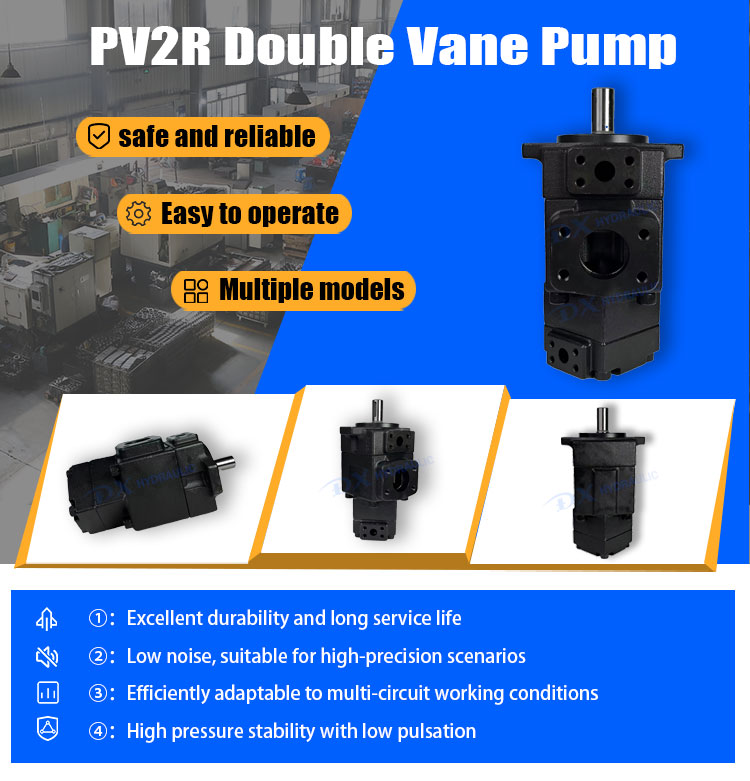
Hydraulic vane pumps generate flow through rotating vanes moving along a cam ring. Because the internal structure depends on precise clearances, a replacement unit must match the original design requirements rather than only the external appearance.
Key Specifications That Decide Replacement Compatibility
| Specification | Typical Examples | Why It Matters |
| Displacement | 10 cc/rev, 25 cc/rev, 50 cc/rev | Controls hydraulic flow output |
| Pressure Rating | 140–250 bar or higher depending on design | Determines load handling ability |
| Shaft Type | Keyed shaft, spline shaft | Affects motor connection compatibility |
| Mounting Style | Flange mount, foot mount | Ensures correct mechanical installation |
| Rotation Direction | Clockwise or counterclockwise | Prevents incorrect pump operation |
Matching Performance Instead of Only Part Numbers
One common mistake during pump replacement is relying only on the old model number. Hydraulic equipment may operate for many years, and original models can become unavailable or receive updated versions.
A better approach is comparing the technical information of the existing pump with the replacement option. Important information includes:
- Pump displacement and flow rate: A different displacement may change machine movement speed.
- Maximum and continuous pressure: The replacement should meet the hydraulic system load requirements.
- Port dimensions and locations: Incorrect connections may require additional adapters or piping changes.
- Shaft size and coupling type: Ensures proper connection with the drive motor.
Cross-reference replacement methods are widely used for hydraulic vane pumps because physical specifications often determine compatibility better than the original identification number alone.
Common Reasons to Replace a Hydraulic Vane Pump
Hydraulic vane pumps are valued for stable flow output and relatively quiet operation, but long-term use can cause internal wear. Replacement may become necessary when performance decreases beyond acceptable levels.
1. Reduced Flow Output
Internal clearance increases as vanes, cam rings, and other precision components wear. This can reduce volumetric performance and affect machine operation.
Typical symptoms include:
- Slower actuator movement
- Lower hydraulic response
- Difficulty maintaining working pressure
2. Excessive Noise or Vibration
Unusual noise may indicate internal wear, air entering the suction line, contamination, or improper operating conditions. Before installing a new pump, users should confirm the cause of failure to prevent repeated damage.
3. Outdated Pump Models
Some older machines continue operating with hydraulic components that are no longer commonly produced. A modern Replacement Hydraulic Vane Pump with matching specifications can extend equipment service life without redesigning the hydraulic circuit.
Installation Factors That Affect Replacement Results
Even a correctly matched pump may experience problems if installation conditions are ignored. Hydraulic systems require clean fluid, proper alignment, and suitable operating conditions.
- Check hydraulic oil condition: Contaminated oil can damage new internal components quickly.
- Verify suction line condition: Air leakage or restricted flow can create cavitation problems.
- Confirm shaft alignment: Misalignment may increase bearing and seal stress.
- Clean the hydraulic circuit: Remaining particles from the failed pump can affect the replacement unit.
Proper installation practices are important because vane pumps rely on accurate internal clearances and stable fluid supply. Installation errors can shorten service life even with a suitable replacement model.
Replacement Applications Across Different Industries
Hydraulic vane pumps are used in many systems where stable flow and reliable pressure control are required. Replacement pumps are commonly applied in equipment such as:
- Industrial hydraulic presses
- Machine tools and manufacturing equipment
- Material handling machinery
- Mobile hydraulic equipment
- Automation systems
Different industries may require different pump configurations. For example, industrial machines often focus on stable continuous operation, while mobile equipment may require compact dimensions and resistance to changing loads.
Important Checks Before Ordering a Replacement Pump
| Check Item | Information Needed |
| Existing Pump Label | Model number, displacement, manufacturer information |
| Hydraulic System Data | Pressure, flow rate, operating temperature |
| Mechanical Connection | Shaft design, flange size, mounting dimensions |
| Application Conditions | Continuous operation, load changes, working environment |
A Practical Way to Replace Without Redesign
Replacing a hydraulic vane pump without changing the hydraulic system is achievable when the new pump matches the original operating requirements. The key is understanding that compatibility depends on technical details rather than appearance alone.
A properly chosen Replacement Hydraulic Vane Pump can restore machine operation while keeping existing valves, pipelines, and actuators in place. Careful comparison of specifications, correct installation, and attention to hydraulic conditions help create a smooth transition from an aging pump to a reliable replacement solution.
