
 Search
Hydraulic double vane pumps are manufactured in a variety of sizes to meet different flow and pressure requirements. The term "double vane" refers to the presence of dual rotor and vane assemblies within the pump housing, which increases the total displacement and allows for smoother flow.
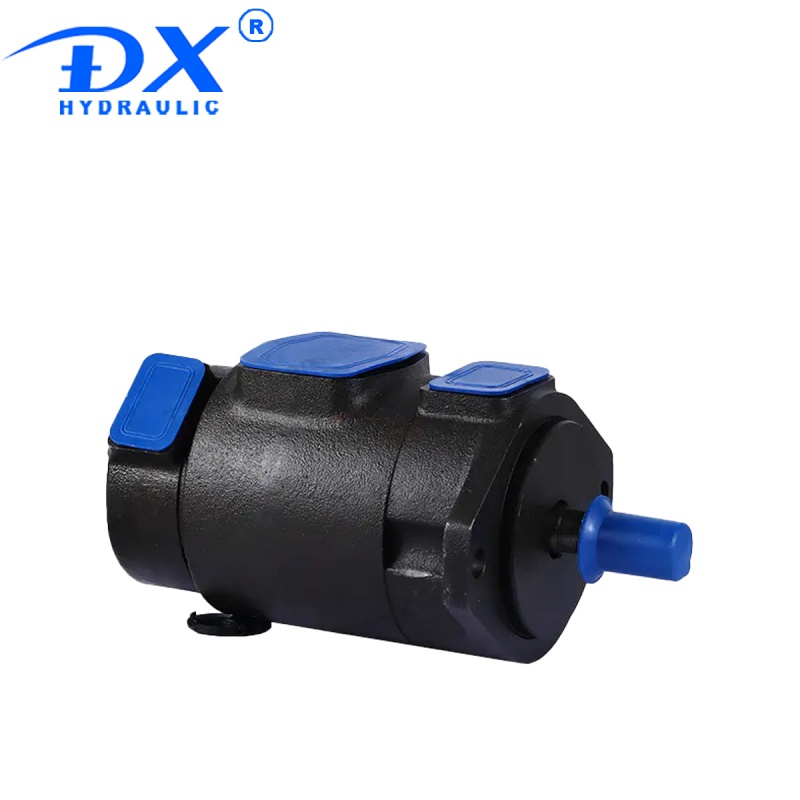
Flow Rate and Displacement: Pump sizes are often categorized by their displacement, measured in cubic centimeters per revolution (cc/rev). Smaller models may have a displacement of around 5–20 cc/rev, suitable for compact machinery or low-flow systems. Medium-sized pumps typically range from 20–50 cc/rev, while larger models can exceed 100 cc/rev for industrial applications.
Pressure Rating: Size also correlates with rated working pressure. Smaller double vane pumps usually operate in moderate-pressure systems, typically up to 16–20 MPa. Larger pumps are designed to handle higher system pressures, sometimes reaching 25–30 MPa, depending on housing and vane construction.
Physical Dimensions: Housing size, shaft diameter, and mounting flange dimensions vary by model to accommodate different machine configurations. Compact pumps are easier to install in limited-space systems, while larger models require more space but provide higher flow capacity.
The range of available sizes allows engineers to select pumps that balance system flow requirements, pressure limitations, and installation constraints.
How Comfortable Is the Hydraulic Double Vane Pump?
While "comfort" is a term often used for human experience, in the context of hydraulic pumps it can refer to operational smoothness, noise levels, and ease of integration into hydraulic systems.
Smooth Operation: The double vane design provides continuous fluid delivery with reduced pulsation compared to single-vane or gear pumps. The dual rotor arrangement divides flow between two pumping chambers, resulting in more even pressure and smoother operation.
Noise and Vibration: Hydraulic double vane pumps typically produce lower noise levels than comparable gear pumps, partly due to the balanced flow from two rotor-vane assemblies. Reduced vibration also improves system stability and reduces stress on connected piping and fittings.
Installation and Maintenance: Comfort also includes operational convenience. Many double vane pumps are designed for straightforward mounting with standardized flanges and shafts. The dual-vane mechanism can sometimes require more careful alignment and inspection during maintenance, but access to replaceable vanes and seals allows for manageable upkeep.
Overall, the hydraulic double vane pump is considered relatively smooth and predictable in operation, which contributes to system reliability and operational ease.
How Does the Hydraulic Double Vane Pump Perform?
Performance of the hydraulic double vane pump can be evaluated in terms of flow consistency, efficiency, and suitability for different operating conditions.
Flow Consistency: The dual-vane rotor system delivers a more uniform flow compared to single-vane designs. This consistent output helps reduce fluctuations in system pressure and minimizes the risk of sudden pressure spikes.
Volumetric Efficiency: These pumps maintain relatively stable volumetric efficiency across moderate pressure ranges. Efficiency can vary depending on fluid viscosity, operating temperature, and maintenance of the vanes and housing surfaces.
Pressure Handling: Hydraulic double vane pumps are designed for moderate to high-pressure applications. While they do not match the pressure capacity of some piston pumps, they provide reliable performance for industrial and mobile hydraulic systems.
Durability: With proper fluid selection and maintenance, the double vane design distributes wear more evenly between two sets of vanes and rotor surfaces. This can extend service life compared to single-vane pumps operating under similar conditions.
Sensitivity to Fluid Quality: As with all vane pumps, performance is influenced by the quality of hydraulic fluid. Contaminants or inadequate lubrication can accelerate wear and reduce both efficiency and flow consistency.
The hydraulic double vane pump offers a range of sizes to meet diverse flow and pressure requirements. Its operational smoothness, low vibration, and manageable maintenance contribute to a type of operational "comfort" within hydraulic systems. Performance is generally consistent, with stable flow, reasonable efficiency, and moderate pressure handling suitable for industrial and mobile applications. Proper selection of size, attention to fluid quality, and regular maintenance are essential to ensure long-term reliability and performance.
