
 Search
How Is It Different from a Fixed Vane Pump
Understanding the fundamental operating principle is essential for grasping the advantages of the variable design.
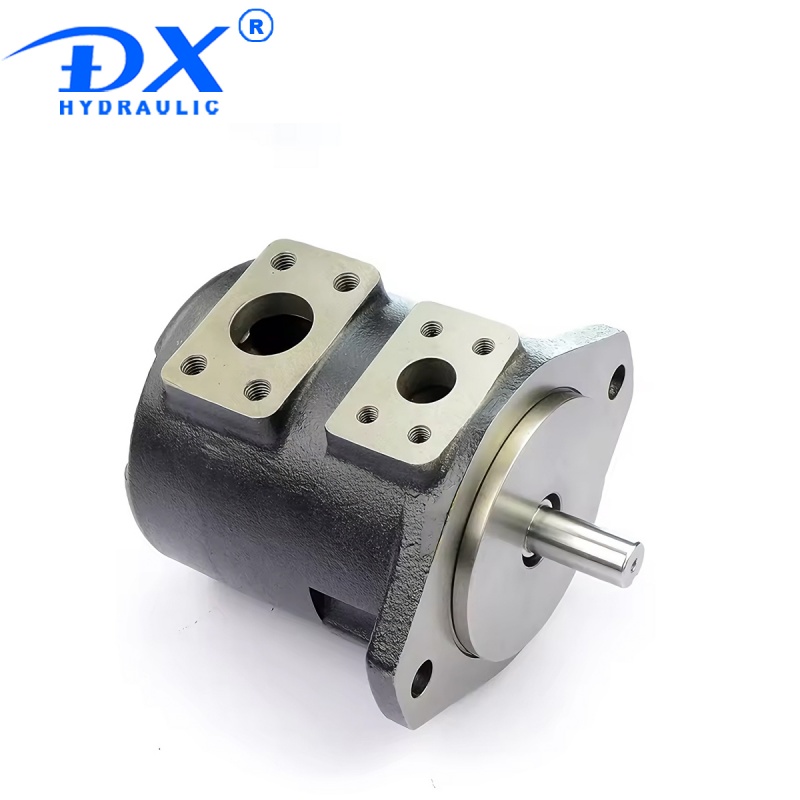
Operating Principle:
Basic Mechanism: Like a fixed vane pump, a variable vane pump uses a slotted rotor connected to a drive shaft. Vanes fit into these slots and are pushed outward against the inner bore of a ring (often called the cam ring or pressure ring) by centrifugal force and hydraulic pressure underneath the vanes. As the rotor turns, fluid is trapped between the vanes, carried from the inlet port to the outlet port, and then displaced as the space contracts.
The Variable Element: The key difference lies in the position of this cam ring. In a fixed vane pump, the ring is stationary and centered around the rotor. In a variable vane pump, the ring is mounted so it can move, typically around a pivot pin. The ring's position relative to the rotor determines the pump's displacement. When the ring is concentric with the rotor, the volume of the chambers does not change as they rotate, so no pumping action occurs (zero displacement). When a spring or hydraulic force moves the ring off-center (eccentric), the chambers increase and decrease in volume, creating flow.
Flow Control: A built-in compensator valve, often referred to as a pressure compensator or load-sensing compensator, automatically adjusts the ring's position. This valve senses the system pressure or the pressure differential across an orifice. When system demand is low and pressure rises to a set level, the compensator valve shifts, directing fluid to a piston that moves the ring against a spring force toward the concentric (low-flow) position. When demand increases and pressure drops, the spring pushes the ring back toward the eccentric (high-flow) position.
Difference from Fixed Vane Pumps:
Output Control: A fixed vane pump continuously delivers a constant flow at a given speed. Any fluid not used by the system must be relieved over a pressure relief valve, converting excess energy into heat. A variable vane pump only produces the flow required by the system, significantly reducing wasted energy and heat generation.
Efficiency: Variable vane pumps are more energy-efficient in applications with varying flow demands because they eliminate the continuous bypassing of fluid at high pressure.
Complexity and Cost: Variable vane pumps are mechanically more complex, containing additional components like the movable ring, bias springs, and compensator valve. This generally makes them more expensive to manufacture and purchase than fixed displacement pumps.
Application Suitability: Fixed vane pumps are well-suited for applications requiring constant flow, such as simple motor circuits. Variable vane pumps excel in applications with varying flow needs, such as clamping and then traversing in a machine tool, or in pressure-compensated systems.
What Are the Primary Advantages of Using a Variable Vane Pump in a Hydraulic System?
The adoption of variable vane pumps is driven by several tangible benefits that impact system performance, operating costs, and machine design.
Energy Efficiency and Reduced Power Consumption: This is the significant advantage. By matching flow to demand, the pump only draws the power necessary to perform the work. In a typical duty cycle with idle or holding periods, this can reduce energy consumption by 30% to 70% compared to a fixed pump system with a relief valve. This translates directly to lower electricity bills for electrically driven machines or reduced fuel consumption for engine-driven applications.
Reduced Heat Generation: When a fixed pump unloads excess flow over a relief valve, the hydraulic fluid absorbs the energy, causing its temperature to rise. This often necessitates a large heat exchanger (oil cooler) to manage the temperature. A variable vane pump minimizes this wasted energy, so the fluid stays cooler. This can reduce the size and cost of the cooling system, or even eliminate the need for one in some applications.
Simpler System Design: In many cases, a variable pump with a pressure compensator can eliminate the need for a separate pressure relief valve in the main circuit, as the pump itself limits the pressure. This simplifies the circuit design and reduces the number of potential leak points and components.
Smoother Operation and Less Noise: Because the pump only generates flow when needed, and the compensator provides smooth transitions between flow states, variable vane pumps can operate more quietly than fixed pumps that are constantly at full flow. The reduction in high-velocity bypassing also contributes to lower system noise levels.
Longer Component Life: Lower operating temperatures and reduced peak pressures in bypass conditions can contribute to longer seal life and reduced wear on system components, including the pump itself, valves, and actuators.
In What Applications Are Hydraulic Variable Vane Pumps Commonly Found?
Variable vane pumps are used across a broad spectrum of industries where hydraulic power with varying demand is required.
Machine Tools: This is a classic application. Machines like injection molding machines, die casting machines, and presses have cycles that require high flow for rapid traverse or clamping movements, followed by high pressure with low or no flow for holding. The variable pump provides the high flow when needed and then "idles" at high pressure with minimal flow during the hold period.
Industrial Hydraulic Power Units: Many general-purpose power units use variable vane pumps to supply hydraulic power to multiple stations or machines that may have intermittent and varying flow requirements.
Automation and Assembly Equipment: In automated assembly lines, hydraulic systems are used for pressing, clamping, and indexing operations. The energy savings and reduced heat from variable pumps are valuable in these often-enclosed production environments.
Material Handling: Forklifts, lift tables, and other material handling equipment benefit from the efficiency of variable pumps, particularly in applications with frequent lifting and lowering cycles.
Automotive Transmissions: A specialized and high-volume application is in modern automatic transmissions, where a variable displacement vane pump is often used as the primary transmission fluid pump. It improves the overall fuel efficiency of the vehicle by reducing the parasitic loss of driving the pump.
How Do Variable Vane Pumps Compare to Variable Piston Pumps?
Both variable vane and variable piston pumps (axial piston or radial piston) can adjust their displacement. The choice between them depends on the specific requirements of the application.
Pressure Capability: Variable piston pumps generally operate at higher pressures. While standard variable vane pumps typically have a pressure rating around 1,000 to 1,500 psi (70 to 100 bar), some high-performance models can reach 2,500 to 3,000 psi (170 to 200 bar). Variable piston pumps, however, commonly operate at 3,000 to 5,000 psi (200 to 350 bar) and beyond, making them necessary for high-pressure applications like heavy earthmoving equipment.
Flow and Power Density: Piston pumps often offer higher power density, meaning they can deliver more flow at higher pressure for a given physical size.
Cost: Variable vane pumps are generally less expensive to manufacture than variable piston pumps. Their simpler construction with fewer high-precision parts makes them a cost-effective solution for low to medium-pressure applications.
Fluid Tolerance: Vane pumps are typically more sensitive to fluid contamination than piston pumps. Maintaining clean fluid is critical for vane pump longevity to prevent the vanes from sticking or wearing excessively.
Noise and Flow Ripple: Vane pumps often produce lower flow ripple (pressure pulsations) than piston pumps, which can result in quieter operation and less stress on downstream components like hoses and fittings.
